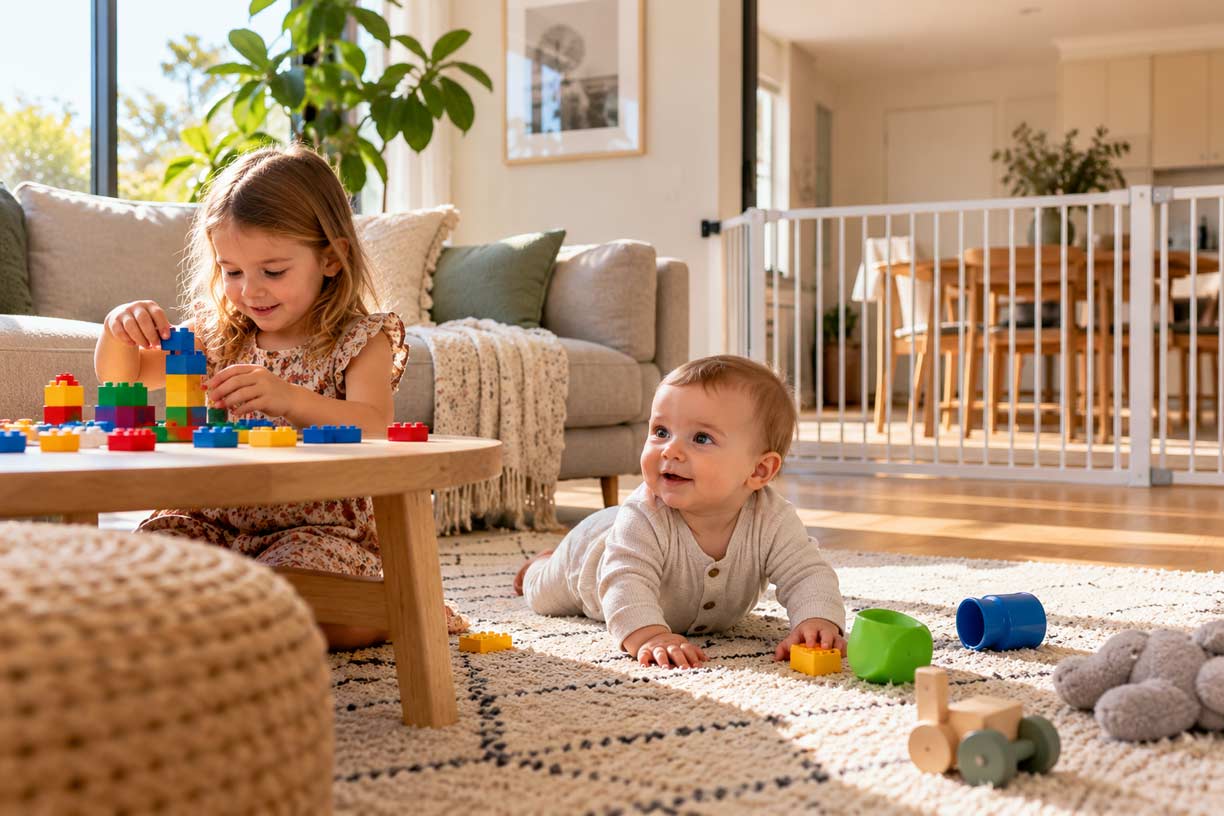

Your dog has had the run of the house for years. Your cat owns the top of the bookshelf. Then a baby arrives, starts crawling, and suddenly the household everyone had figured out needs rethinking from the floor up. Keeping a baby and a pet safe under the same roof is one of the more overlooked parts of preparing a home, and it is rarely as simple as keeping them apart.
The good news is that babies and pets coexist safely in homes across Sydney every day. It takes a bit of planning, the right physical boundaries, and an understanding of where the genuine risks sit rather than the imagined ones. This guide walks through how to set up a home so your child and your pet can share it safely, and where a few well-placed changes make the biggest difference.
Why Pets Change the Baby Proofing Picture
Most baby proofing advice assumes an empty stage: a home with hazards to remove and a child to protect. Add a pet and the picture shifts. Now there is a second living creature with its own routines, its own spaces, and its own stress responses, moving through the same rooms as a curious, grabbing, unpredictable baby.
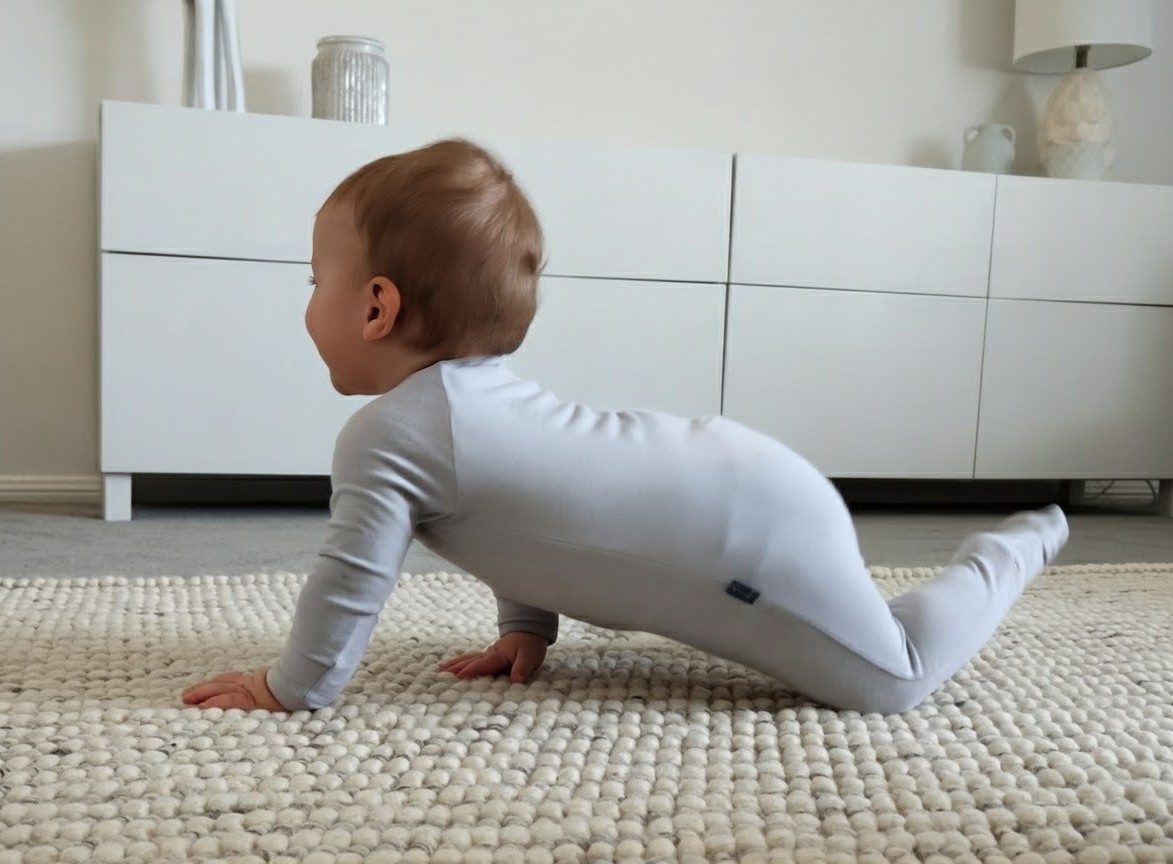
The risks run in both directions. A crawling baby can corner a resting dog, pull a tail, or reach into a food bowl. A startled or territorial pet can snap or scratch. Beyond direct interactions, pet-related items introduce hazards a pet-free home never has to think about: food bowls, litter trays, toys with small parts, and pet doors that a determined toddler will happily crawl through.
Understanding this two-way dynamic is the foundation. The goal is not to separate baby and pet permanently, but to build a home where their interactions happen on safe terms and where each has a space the other cannot intrude on.
Creating Separate Zones the Safe Way
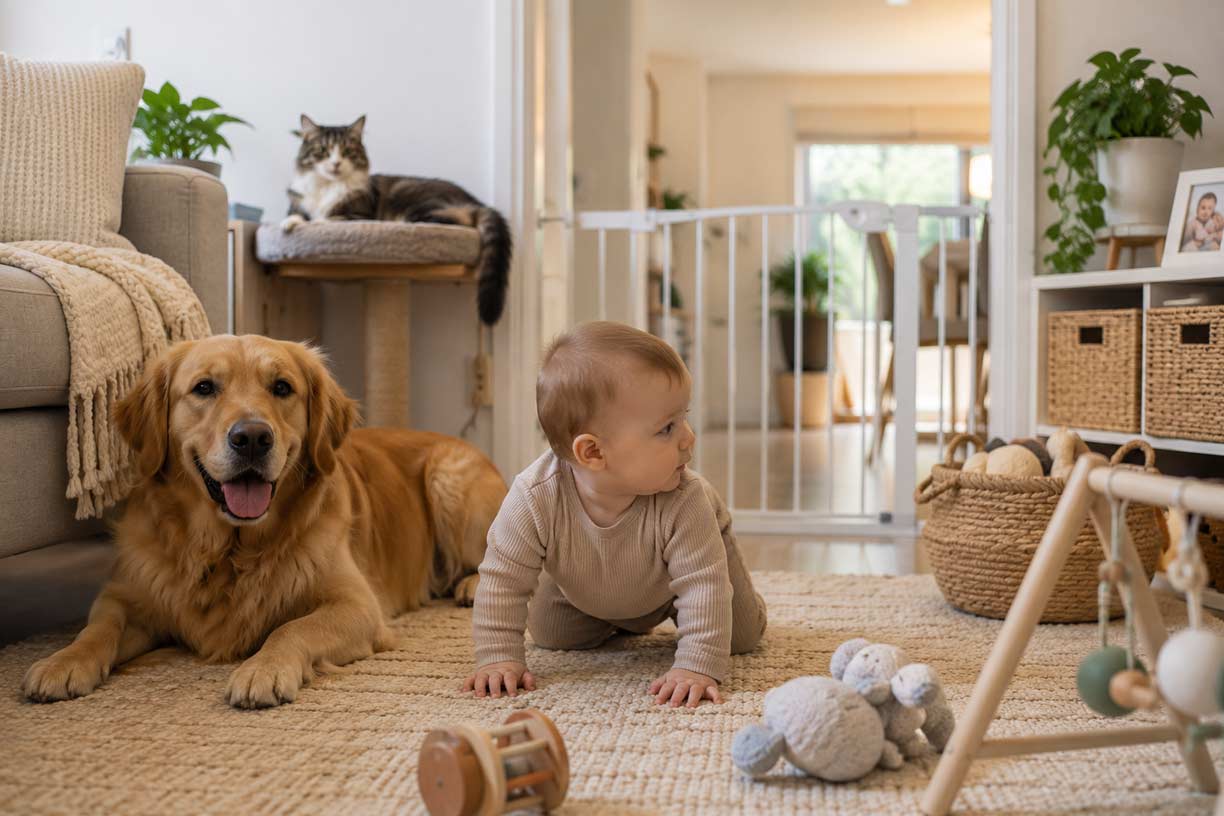
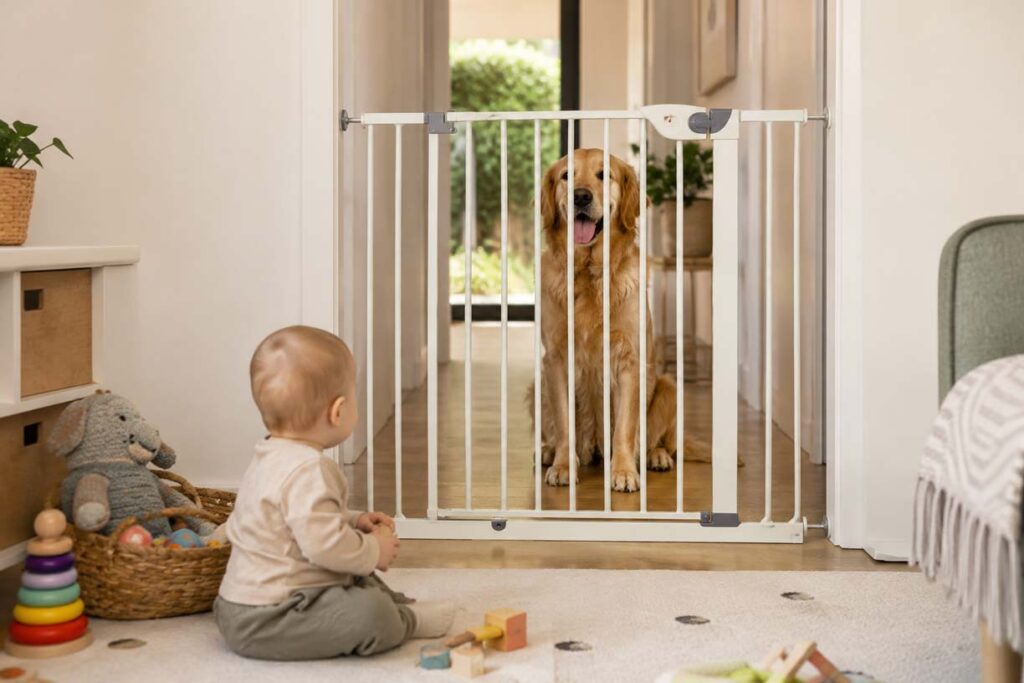
The single most effective strategy is zoning: giving your pet a retreat the baby cannot access, and giving your baby play areas the pet can be kept out of when needed. Physical barriers do the heavy lifting here, and the right gate makes daily life far easier than constant supervision alone.
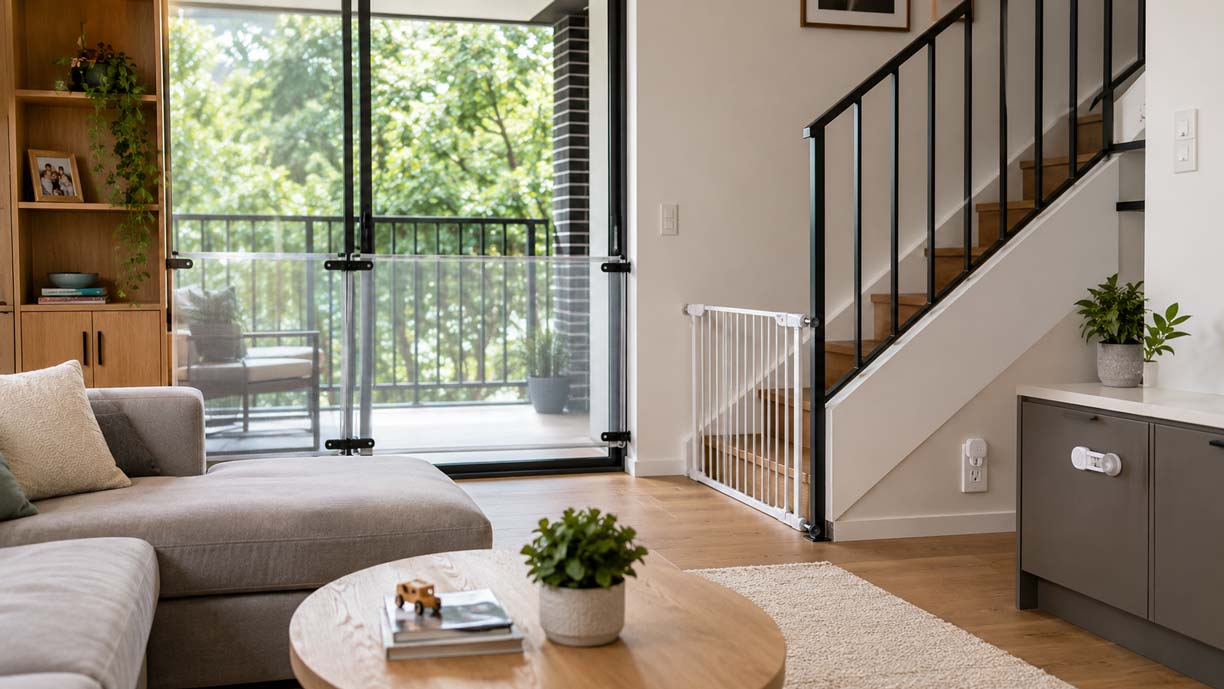
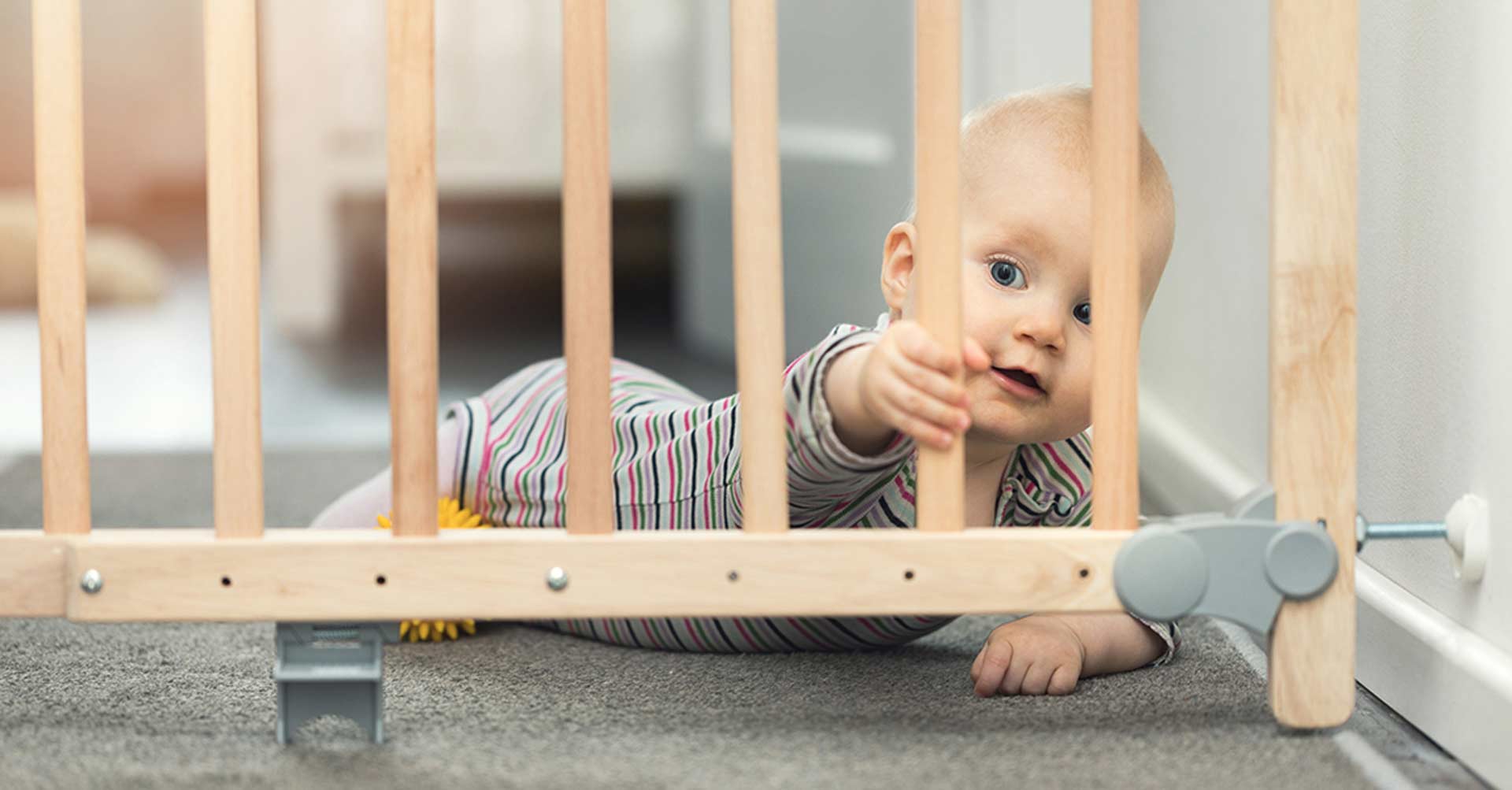
A safety gate is the workhorse of a pet-and-baby household. It lets you close off a room, a hallway, or a feeding area without shutting doors and isolating anyone completely. Professional pet gate and pet proofing solutions are designed exactly for this, creating flexible boundaries that keep a baby and a pet safely apart while still letting the household flow.
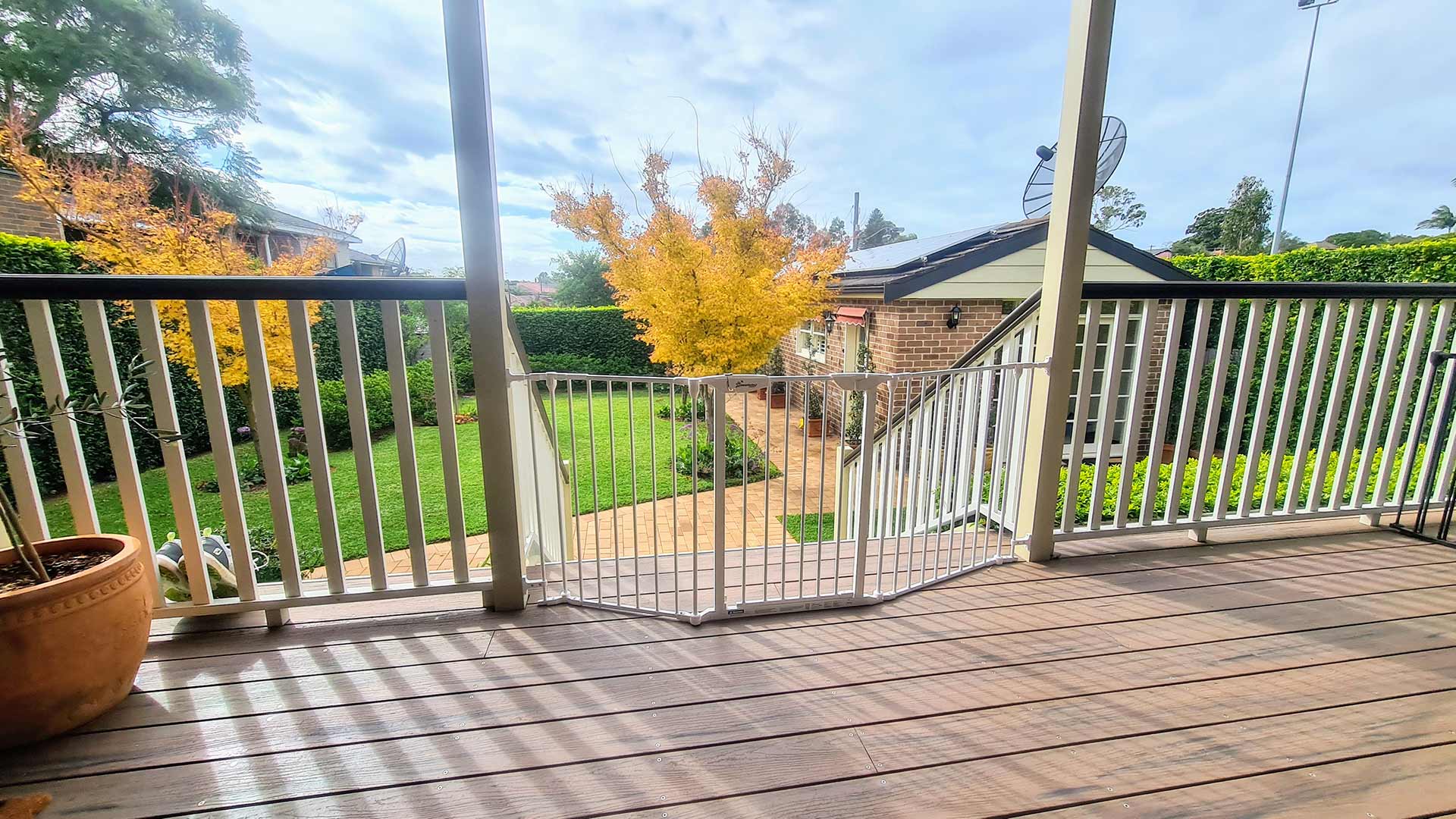
For doorways and the bottom of stairs, pressure-mounted gates that need no drilling are quick to fit and easy to move between rooms as your routine changes. For wider openings or open-plan spaces, a retractable or custom gate handles the gap a standard gate cannot. The key is matching the barrier to the space rather than forcing one gate to do every job.
Feeding Areas: A Bigger Hazard Than Most Parents Expect
Pet feeding stations are one of the most underestimated hazards in a pet-owning home with a baby. A floor-level food or water bowl is exactly at crawling height, and it draws a baby in. Water bowls are a drowning risk, small enough to be ignored yet deep enough to be dangerous for an infant. Dry food and treats are choking hazards, and a dog guarding its bowl is a bite risk.
The fix is to move feeding out of the baby’s reach. Feed pets behind a gated area or on a raised surface a baby cannot get to, and pick bowls up between meals rather than leaving them down all day. For cats, elevated feeding stations solve the problem neatly. The same thinking applies to litter trays, which should sit behind a barrier the cat can pass but the baby cannot.
Furniture, Climbing and the Shared Living Space
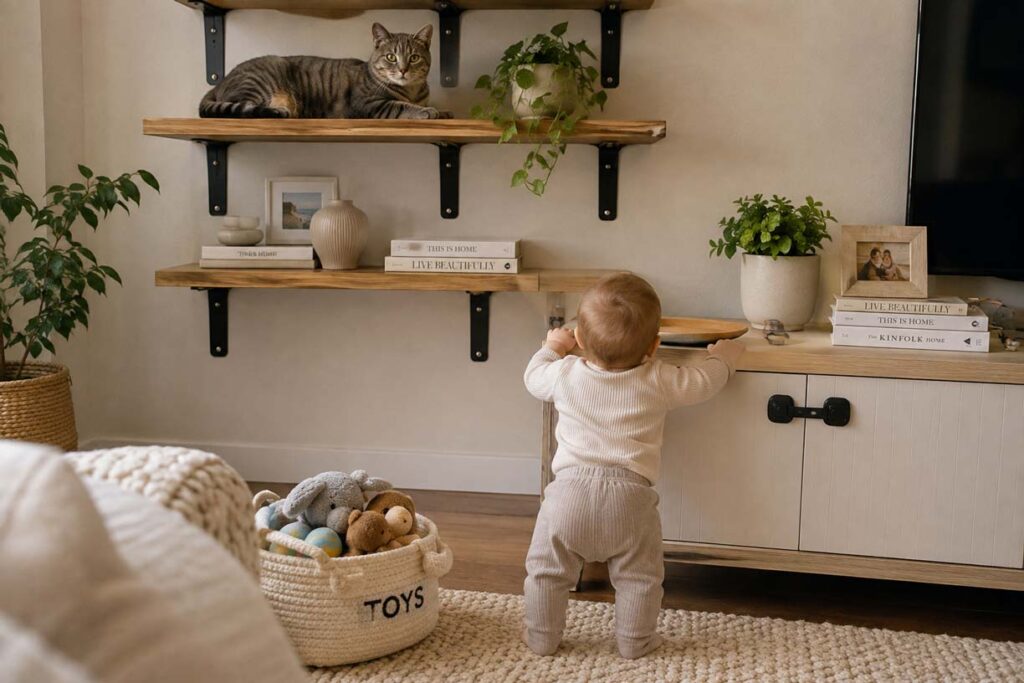
Pets and babies both climb, and shared living spaces are where their worlds overlap most. A cat that leaps onto shelves and a baby that pulls up on furniture create the same underlying risk from different directions: unstable furniture coming down.
Anchoring is essential in any home with a baby, and a pet raises the stakes. Furniture anchoring straps secure bookshelves, drawers and units to the wall so that neither a climbing cat nor a pulling toddler can topple them. It is a small, largely invisible change that removes one of the most serious injury risks in the home.
Pet toys deserve a look too. Many contain squeakers, stuffing or small parts that are fine for a dog but a choking hazard for a baby. Keep pet toys and baby toys in separate, defined spots, and do a quick floor sweep before your baby has free rein of a room.
Managing Introductions and Everyday Interactions
Physical barriers handle the environment, but daily habits handle the relationship. Supervised, calm introductions on the pet’s terms build a safe dynamic over time. Never leave a baby and a pet together unsupervised, no matter how gentle the animal has always been, because a baby’s unpredictable movements can provoke a reaction no one saw coming.
Give your pet a guaranteed escape route to its own space whenever things get overwhelming. A pet that knows it can retreat is far less likely to feel cornered, and a gated retreat the baby cannot follow into is worth its weight in peace of mind. As your child grows, teaching gentle handling becomes part of the picture, but until then, structure and supervision carry the load.
Pet Doors and Escape Points
A pet door is a hazard hiding in plain sight. A toddler will find it, and a pet door usually opens straight to a yard, a driveway, or the street. Any pet door within a baby’s reach needs a plan: a lockable model, a gated approach that keeps the baby away from it, or a barrier that lets the pet through but stops the child.
The same applies to gates and fences the pet uses. A side gate the dog nudges open is also a gate a toddler can slip through. Securing these external escape points matters as much as anything inside the home, because the consequences of a child getting out unsupervised are the most serious of all.
Getting the Setup Right for Your Home and Your Pet
Every pet-and-baby household is different. A large dog, a nervous rescue cat, an open-plan apartment and a multi-level house each call for a different mix of gates, barriers and boundaries. That is where an expert eye saves time and worry, mapping the real hazards specific to your animal, your child’s stage, and your layout.
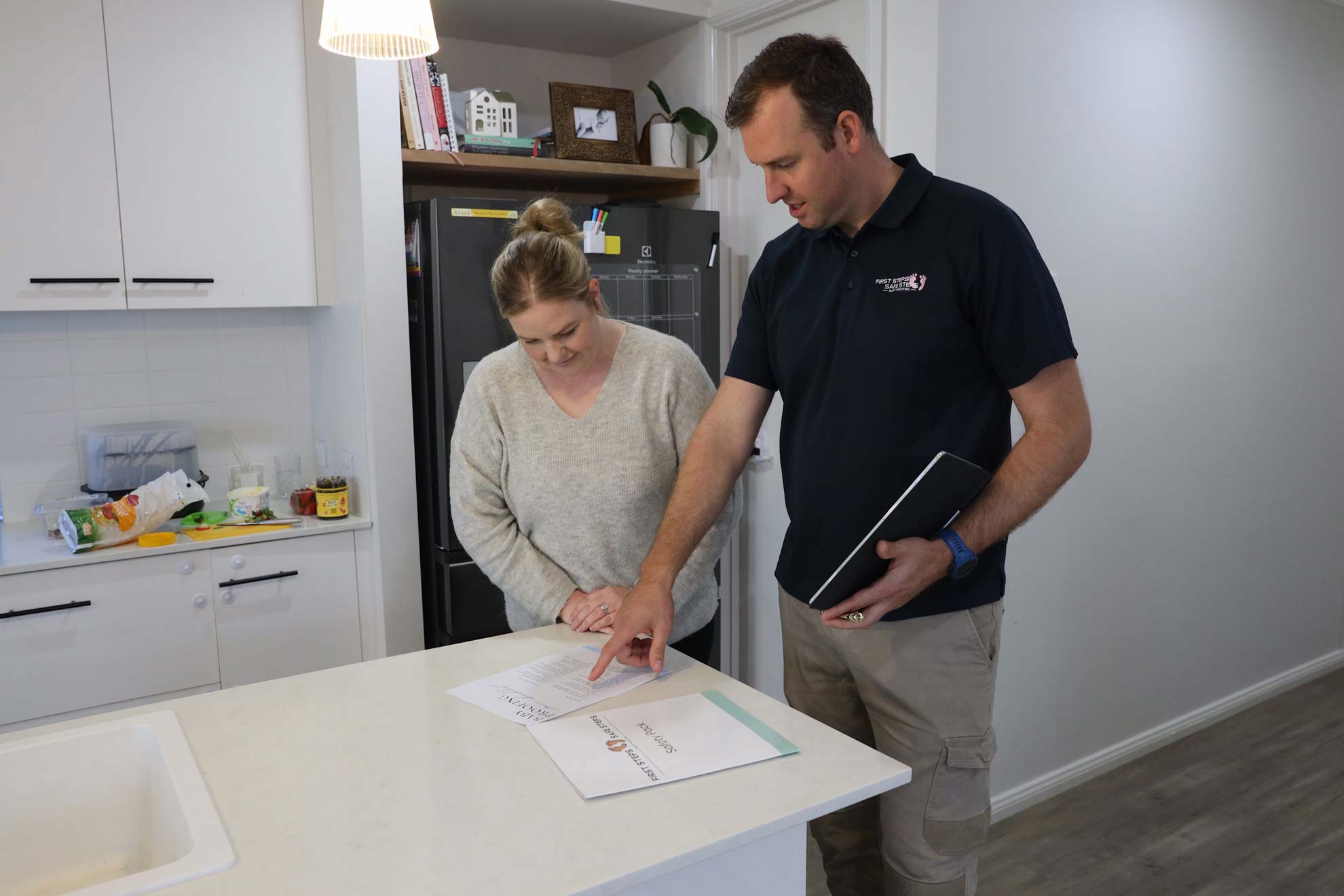
As a Recommended Baby Safety Installer for DreamBaby and a partner of Rescueblue, Australia’s leading paediatric first aid provider, First Steps Safe Steps assesses a pet household as a whole rather than applying a generic checklist. Mitchell can recommend the right zoning, gates and anchoring for your specific situation, and install it in a single visit. Same-week appointments are available across greater Sydney.
Explore professional baby proofing services across Sydney and set up a home where your baby and your pet can safely share the space.
FAQs: Baby Proofing With Pets
Can babies and pets safely live in the same home?
Yes. With the right boundaries, supervised interactions and separate retreat spaces, babies and pets coexist safely in homes every day. The key is planning the setup before your baby becomes mobile rather than reacting once problems arise.
What is the most important safety step in a pet household?
Zoning with safety gates. Giving your pet a retreat the baby cannot reach, and being able to close off feeding areas or play spaces, removes the majority of everyday risks and reduces reliance on constant supervision alone.
Are pet food and water bowls really a hazard?
Yes. Floor-level bowls sit at crawling height. Water bowls are a drowning risk for infants, dry food is a choking hazard, and a pet guarding its bowl can bite. Feed pets out of reach and pick bowls up between meals.
Should I ever leave my baby alone with our pet?
No. Even the gentlest, most familiar pet can react unpredictably to a baby’s sudden movements. Interactions should always be supervised, and your pet should always have an escape route to a space the baby cannot follow into.
How do I stop my toddler using the pet door?
Use a lockable pet door, gate off the approach to it, or fit a barrier that lets the pet through but stops the child. Pet doors usually open to a yard or street, so securing them is a high priority once a baby is mobile.
Can you set up a pet-safe home in one visit?
In most cases, yes. A professional assessment maps the hazards specific to your pet, your child’s stage and your layout, then installs the right gates, barriers and anchoring in a single same-week appointment across greater Sydney.