
Your baby is on the move, your rental has stairs, low windows and open cupboards, and somewhere in the back of your mind is a nagging question: how much of this can you actually change without risking your bond? It is one of the most common worries we hear from renting parents across Sydney, and the good news is that the answer is far more reassuring than most people expect.
Renting does not mean choosing between your child’s safety and your security deposit. NSW tenancy law is on your side more than you might think, and the majority of genuinely effective baby proofing rental NSW solutions require no drilling, no permanent fixtures, and no landlord battle. This guide walks through exactly what you are entitled to do, what needs a conversation first, and how to keep your home safe while keeping your bond intact.
What NSW Tenancy Law Actually Says About Safety Modifications
Here is the part most renting parents do not realise. Under changes to the Residential Tenancies Act in NSW, landlords cannot unreasonably refuse consent for a range of minor modifications, and several safety changes fall squarely into that protected category.
For baby proofing specifically, the modifications a landlord generally cannot unreasonably withhold consent for include:
- Securing furniture to non-tiled walls to prevent tip-overs
- Fitting child-resistant latches to outdoor gates
- Installing window safety devices
- Installing child safety gates inside the property
- Replacing internal window coverings such as blinds with safer, cordless alternatives
The key legal distinction is between minor modifications and structural or permanent ones. Minor modifications, the category most baby proofing falls into, are protected. Anything that permanently alters the property may still need formal written consent. When you are unsure which side of the line a change sits on, the official guidance from NSW Fair Trading is the source of truth, and it is worth a five-minute read before you start.
A practical rule of thumb: if a modification can be reversed and the property returned to its original condition when you leave, you are almost always in safe territory for your bond.
The Golden Rule: Get Consent in Writing
Whenever a modification involves drilling, screwing, or any fixing to the wall, get written permission from your landlord or agent before you begin. This single step is what protects you from bond deductions later.
Written consent does three things. It confirms the landlord has agreed to the change, it records the agreed condition the property will be returned in, and it removes any grey area at the final inspection. A quick email exchange is enough. You do not need a formal contract, just a clear written record that both parties have agreed.
Most landlords say yes to reasonable safety requests without hesitation. A parent asking to anchor a bookshelf so it cannot crush a toddler is not a difficult conversation. Framing it as a safety measure, not a renovation, almost always lands well.
No-Drill Solutions That Never Touch Your Bond
This is where renting parents have far more options than they assume. A large proportion of professional baby proofing needs zero permanent installation, which means it sits entirely outside any bond risk and needs no landlord consent at all.
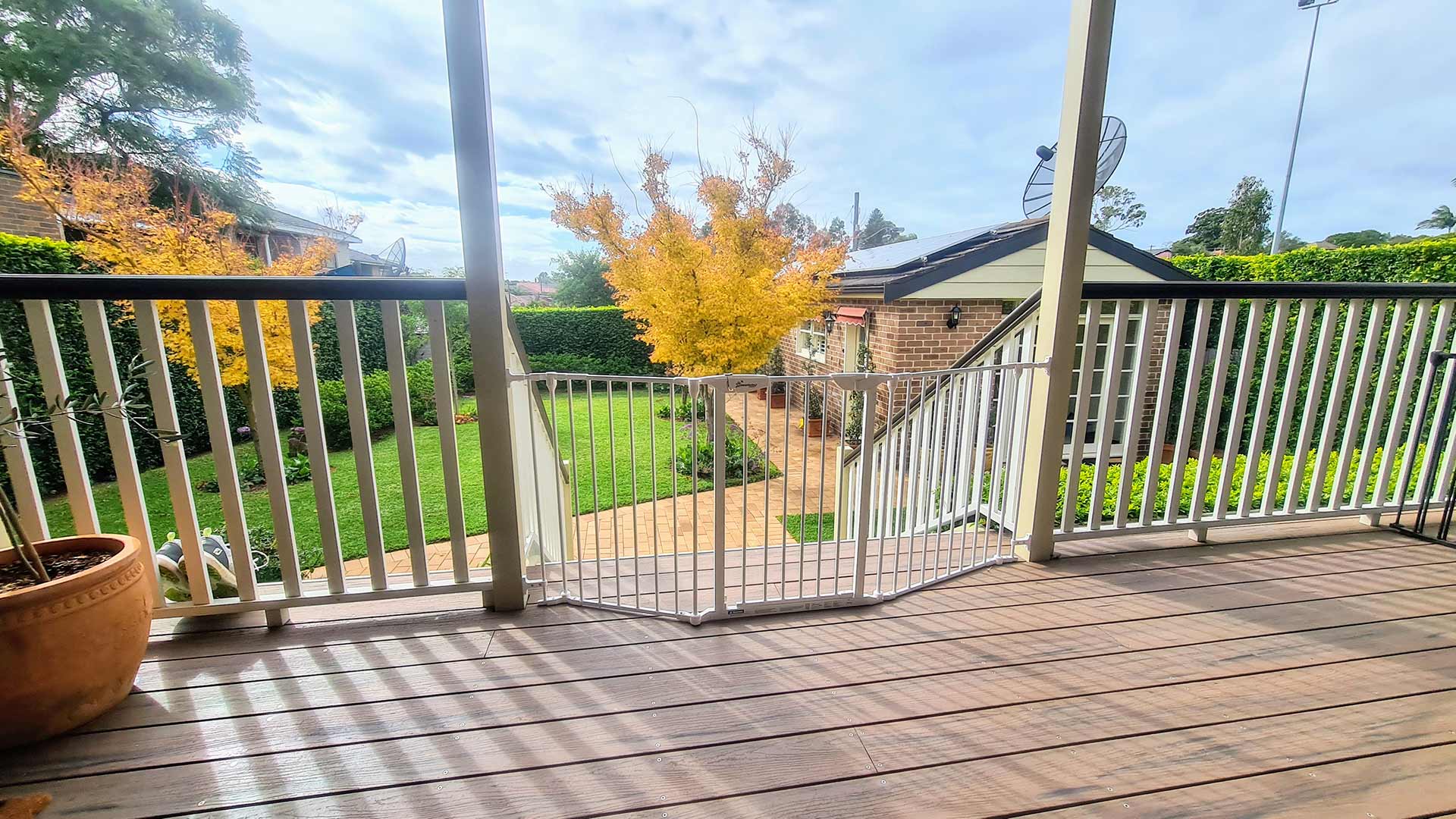
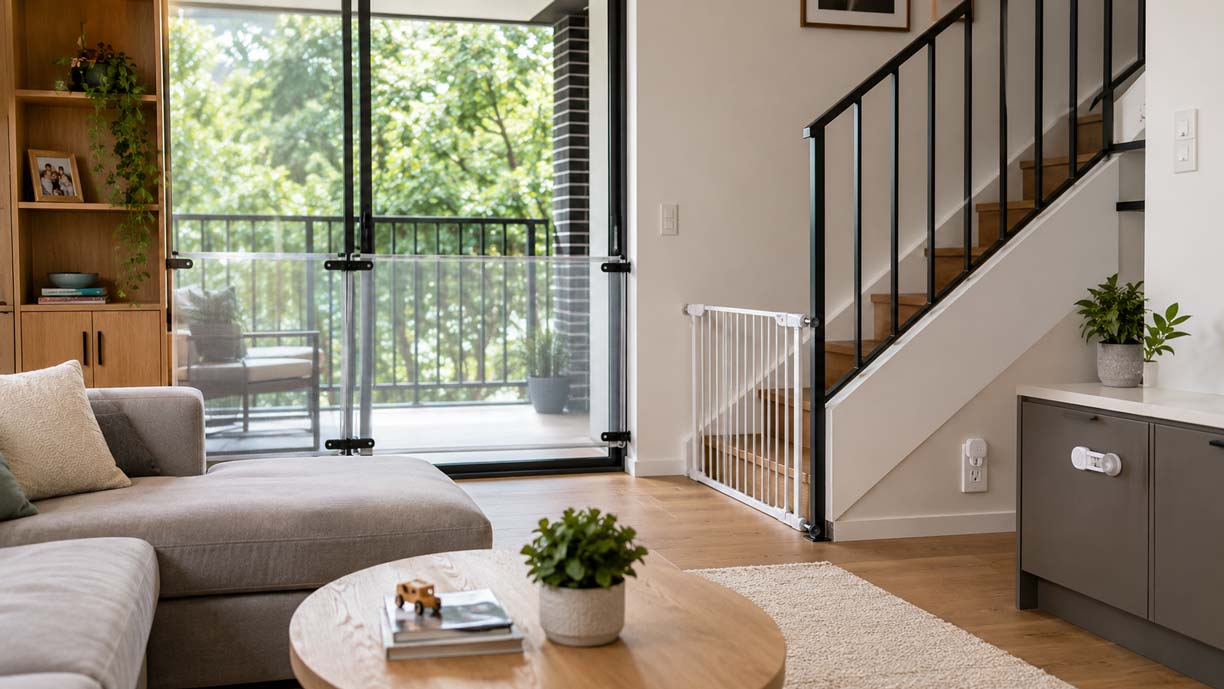
The standout solution for renters is the Perspex safety barrier. Custom-cut to fit your existing balustrade or railing, Perspex safety barriers for renters are shatterproof, effective against both gap and climbing hazards, and fully removable when your lease ends. They leave no mark on the balustrade and are one of the few solutions that genuinely upgrade balcony and staircase safety without a single hole in the wall.
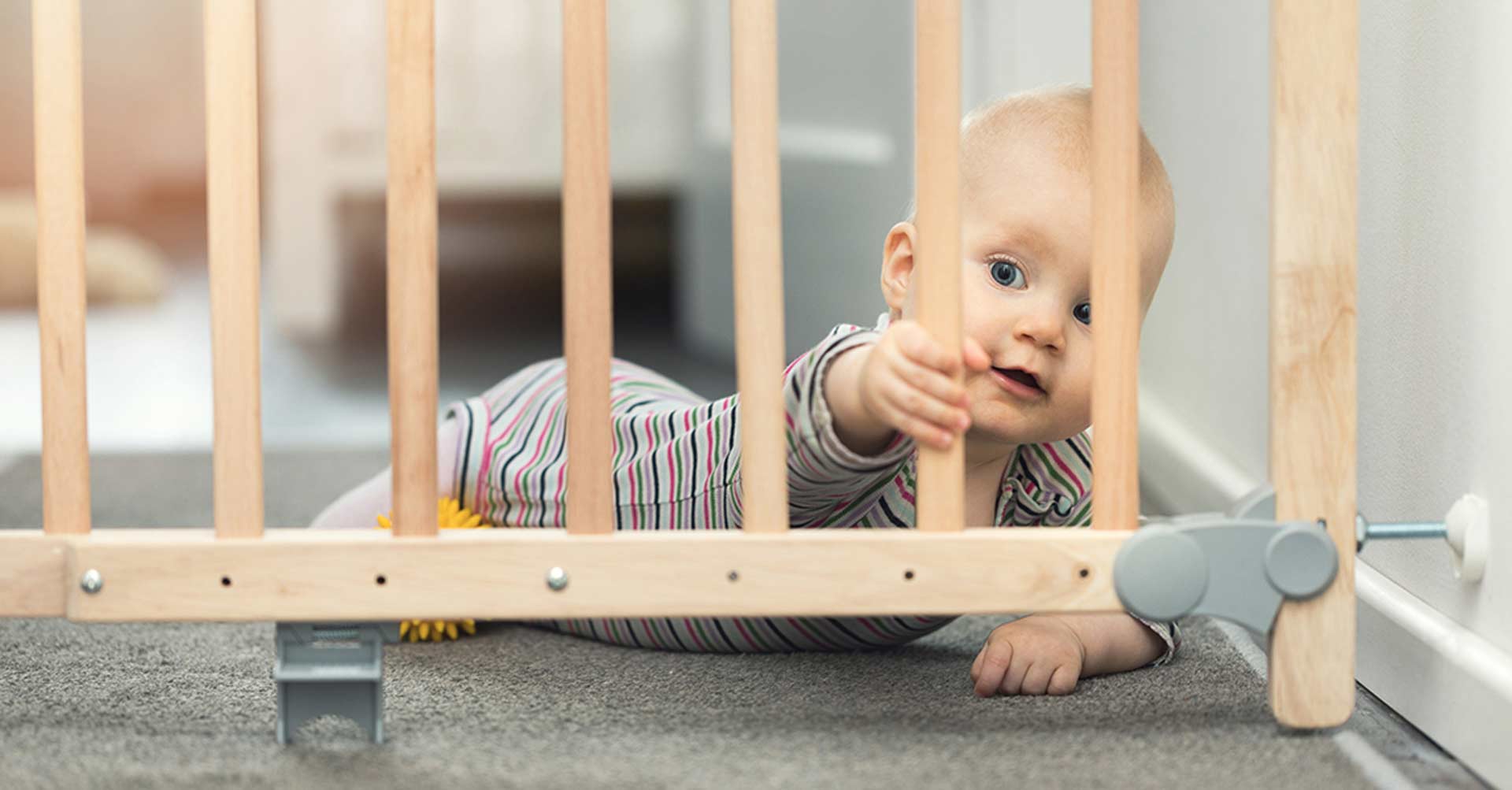
For doorways, hallways and the bottom of stairs, pressure-mounted baby gates that need no drilling hold in place through tension alone. They install in minutes, relocate easily, and come out cleanly at the end of a tenancy. One important safety note: pressure gates should never be used at the top of stairs, where a hardware-mounted gate is the only safe choice. For that specific situation, drilling with written landlord consent is the right call.
Other bond-safe options that require no permanent fixing include adhesive cupboard and drawer locks, outlet plugs, corner cushions, door stoppers, and non-slip bath mats. None of these touch the structure of the property, and all of them come away without a trace.
When Drilling Is Worth It (And How to Do It Bond-Safely)
Some hazards cannot be fully resolved without a fixing, and the two most important are furniture tip-overs and window falls. Both are among the most serious risks to a young child, and both usually justify the small effort of getting consent to drill.
Furniture tip-overs are a leading cause of serious injury in young children. A toddler pulling open a drawer or climbing a bookshelf can bring heavy furniture down in seconds. Furniture anchoring straps fix the item securely to the wall and are exactly the kind of safety modification a landlord cannot unreasonably refuse. The wall damage is minimal, a couple of small screw holes that patch and paint over easily when you leave.
Window and blind cord safety is the other priority. Window falls happen fast and from lower heights than most parents expect, and blind cords are a strangulation hazard within reach of a cot. Window cable locks restrict how far a window opens while still allowing airflow, and they leave a footprint small enough that most landlords approve them on sight. Paired with cordless blinds or cord tensioners, they close off one of the most underestimated hazards in any rental.
The approach for any drilled solution is the same: identify the genuine hazard, request written consent framed as a safety measure, install it properly, and keep the fixing small and patchable. Done this way, drilling and bond protection are not in conflict at all.
How to Approach the Landlord Conversation
The landlord conversation is the part renting parents dread most, and it is almost always easier than imagined. A few things make it go smoothly.
Be specific about what you want to install and why. “I would like to anchor the bookshelf and chest of drawers to the wall so they cannot tip onto our baby” is clear, reasonable, and hard to refuse. Vague requests invite hesitation; specific safety requests invite a yes.
Offer to return the property to its original condition at the end of the lease. This reassurance removes the landlord’s main concern and often turns a maybe into a yes. Where a professional has done the work, mention it. A documented, professional installation gives the landlord confidence that the job is being done properly and reversibly.
If you would like backup for that conversation, a professional assessment gives you a clear list of what needs consent and what does not, along with documentation you can share with the landlord if they have questions.

A Note for Renters Versus the 2024 Room-by-Room Approach
If you are after a room-by-room walkthrough of every childproofing task in a rental, from kitchen cupboards to bathroom taps, our earlier guide on childproofing for renters covers that ground in detail. This guide is the companion to it, focused specifically on the tenancy and bond side: what the law allows, what needs consent, and how to protect your deposit. Read together, they give you both the practical checklist and the legal confidence to act on it.
Getting It Done Without the Guesswork
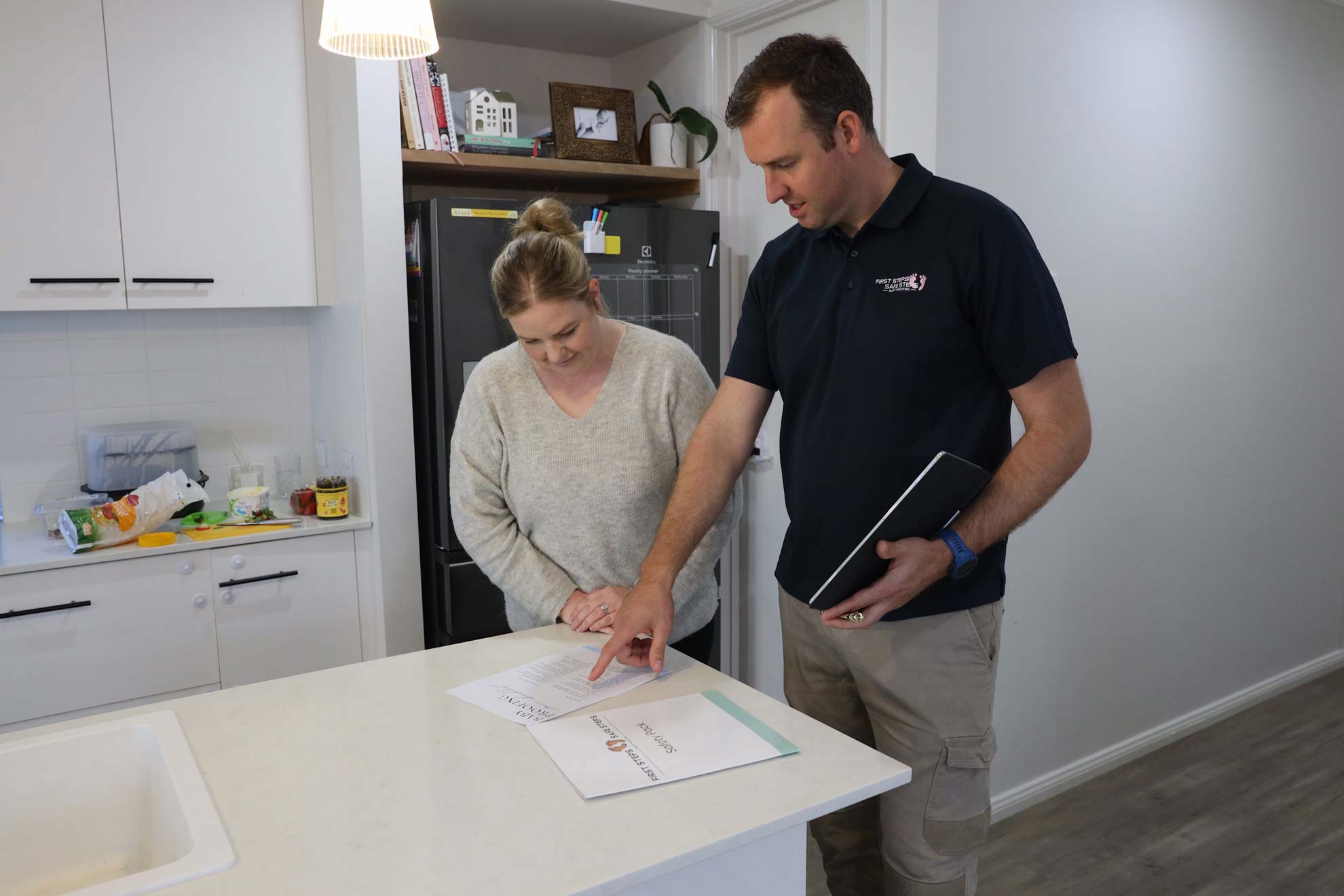
The hardest part of baby proofing a rental is not the installation. It is knowing which hazards genuinely need addressing, which solutions are bond-safe, and which of the few that need consent are worth the conversation. That is exactly what a professional walk-through resolves in a single visit.
As a Recommended Baby Safety Installer for DreamBaby and a partner of Rescueblue, Australia’s leading paediatric first aid provider, First Steps Safe Steps brings verifiable expertise to every rental assessment. Mitchell has helped hundreds of Sydney families make renting and child safety work together, and every assessment is tailored to your specific home and your lease. Same-week appointments are available across greater Sydney.
Explore professional baby proofing services across Sydney and book a renter-friendly walk-through that keeps your baby safe and your bond intact.
FAQs: Baby Proofing a Rental in NSW
Can I baby proof a rental in NSW without losing my bond?
Yes. Most effective baby proofing needs no permanent modification at all. Perspex barriers, pressure-mounted gates, adhesive locks, outlet plugs and corner cushions are all fully removable and sit entirely outside any bond risk. For the few solutions that need drilling, such as furniture anchors, written landlord consent and a small patchable fixing keep your bond protected.
Does my landlord have to allow safety modifications?
Under NSW tenancy law, landlords cannot unreasonably refuse consent for minor safety modifications, including securing furniture to non-tiled walls, fitting child-resistant latches to outdoor gates, installing window safety devices, and fitting internal safety gates. Structural or permanent changes may still require formal written consent.
Do I need written permission to drill for furniture anchors?
Yes. Any modification involving drilling into walls requires written consent from your landlord or agent. Furniture anchoring is a recognised safety measure that a landlord cannot unreasonably refuse, so a clear written request framed around your child’s safety is almost always approved.
Are pressure-mounted gates safe for a rental staircase?
Pressure-mounted gates are ideal for doorways, hallways and the bottom of stairs, and they require no drilling. They should never be used at the top of stairs, where only a hardware-mounted gate is safe. For the top of stairs, drilling with written landlord consent is the correct approach.
What baby proofing can I do with no landlord consent at all?
Anything that does not fix permanently to the property. That includes Perspex safety barriers, pressure-mounted and flexi-fit gates, adhesive cupboard and drawer locks, outlet plugs, corner cushions, door stoppers, blind cord tensioners and non-slip bath mats. All are removable and leave no trace when your lease ends.
Should I get a professional assessment for a rental?
A professional walk-through identifies which hazards genuinely need addressing, which solutions are bond-safe, and which few require landlord consent. It also provides documentation you can share with your landlord if questions arise. For renting parents who want certainty without the guesswork, it is the most reliable option.