
How to Baby Proof a Grandparent’s Home
Updated May 2026
The cot is borrowed, the highchair is on loan from a neighbour, and the spare room has been quietly turned back into a guest room. Your grandchild is coming to stay, and you’ve realised the house hasn’t had a one-year-old in it for thirty years.
Most grandparents in Sydney didn’t plan for this. The home was set up for adults a long time ago, and it has settled into the rhythm of two people who don’t pull on tablecloths or open cupboards under the sink. When a curious toddler arrives for the weekend, or every weekday while their parents are at work, the gaps become obvious very quickly.
The good news is that making a grandparent’s home safe for visiting grandchildren is rarely about a major overhaul. It’s about identifying the specific hazards a young child will find, and addressing them with solutions that are discreet, removable, and considered, so the home still feels like yours.
This guide covers what comes up most often during professional baby proofing assessments in grandparents’ homes across Sydney, and what genuinely works.
Why a Grandparent’s Home Needs Its Own Approach
A grandparent’s home is a different baby proofing problem from a new parent’s home. The fittings are often older, the layout was designed before current building standards, and the home is rarely childproofed by default. Stairs may have non-standard widths, balustrade gaps may be wider than today’s regulations allow, and decades of accumulated furniture, glassware, and household items sit at exactly toddler height.
There is also a second consideration that doesn’t apply to most parents: trip risk for the grandparents themselves. Traditional baby gates with a bottom bar are a genuine hazard for older adults, particularly at the top of stairs or in low-light hallways at night. A safety solution that protects the grandchild but creates a fall risk for the grandparent is not a solution.
The right approach is one that protects the child without compromising the safety, aesthetics, or daily comfort of the people who actually live in the home.
The Hazards Grandparents’ Homes Have That Newer Homes Don’t
Older Sydney homes, particularly in the Northern Suburbs, Hills District, and outer suburban areas where grandparents are most likely to live, carry a different hazard profile to newer builds. The most common findings during a professional walk-through include:
- Wider balustrade gaps on staircases and balconies, predating current 125mm standards
- Lower windows with sashes that open fully, often without restrictors
- Older blind cords with looped designs that current standards have phased out
- Glass-fronted cabinets at toddler height, often containing decorative or fragile items
- Heavy free-standing furniture: bookcases, china cabinets, dressers, that have never been anchored
- Sharp-edged coffee tables and hearth surrounds that were never an issue with adult visitors
- Pool fencing that meets older standards but not current NSW requirements
None of this means the home is unsafe for adults. It simply means it was never designed for a one-year-old, and the fittings reflect that.
Book a Walk-Through Before the Next Visit
If your grandchild is visiting regularly or moving in for a stretch, a professional baby proofing assessment of a grandparent’s home in Sydney takes the guesswork out of it. As a professional baby-proofing specialist in Sydney, Mitchell offers same-week appointments across greater Sydney and will assess the actual home, not work from a checklist. Book a home safety walk-through before the next visit.
Stairs and the Trip Hazard Problem
Stairs are the single most important baby proofing decision in a grandparent’s home, and the one where the choice of baby gate matters most.
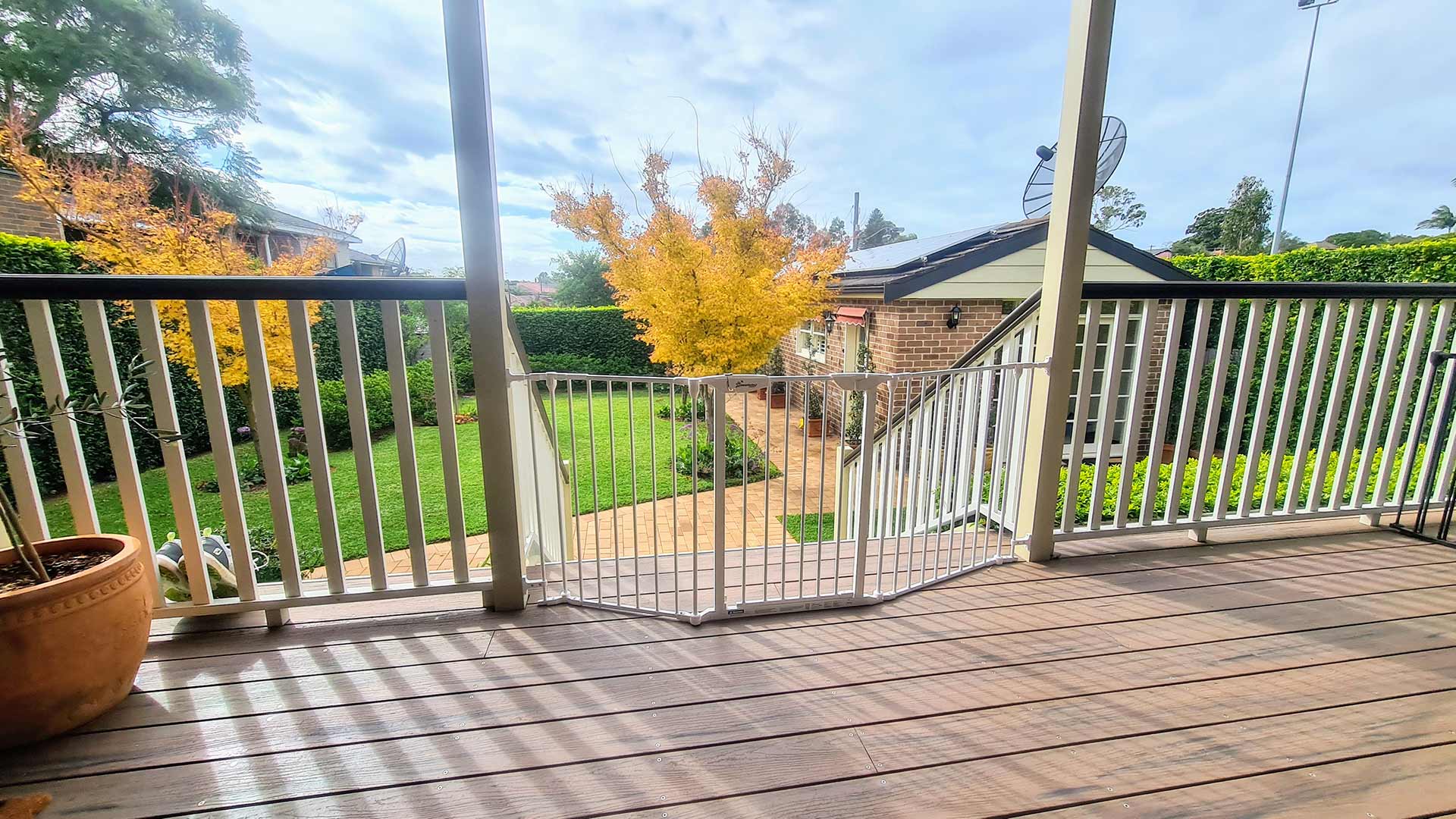
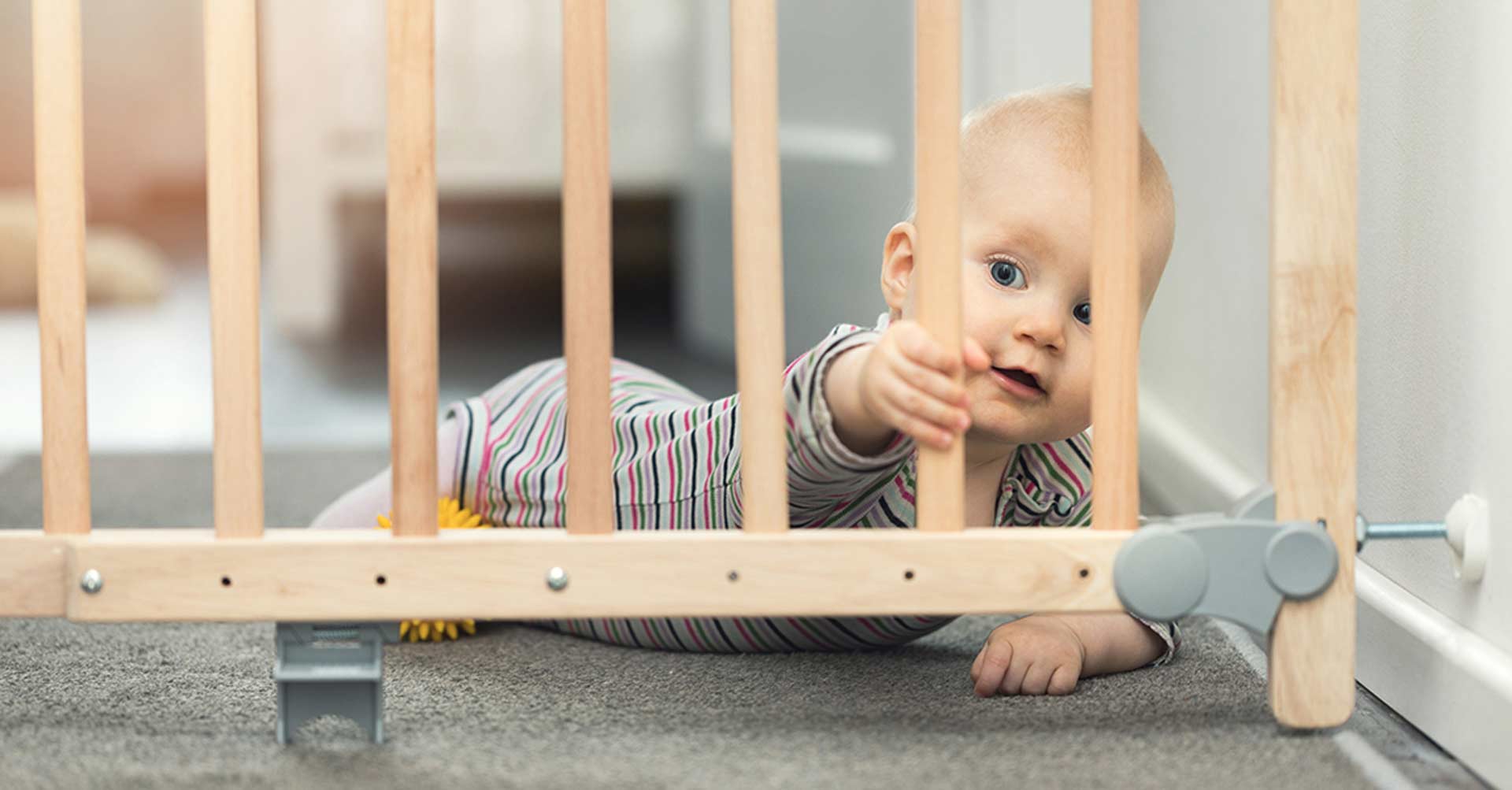
A traditional pressure-mounted baby gate with a bottom bar is unsuitable at the top of stairs for any household, but in a home where older adults are walking through that opening multiple times a day, the trip risk compounds. A hardware-mounted gate with no bottom bar is the only appropriate choice at the top of a staircase.
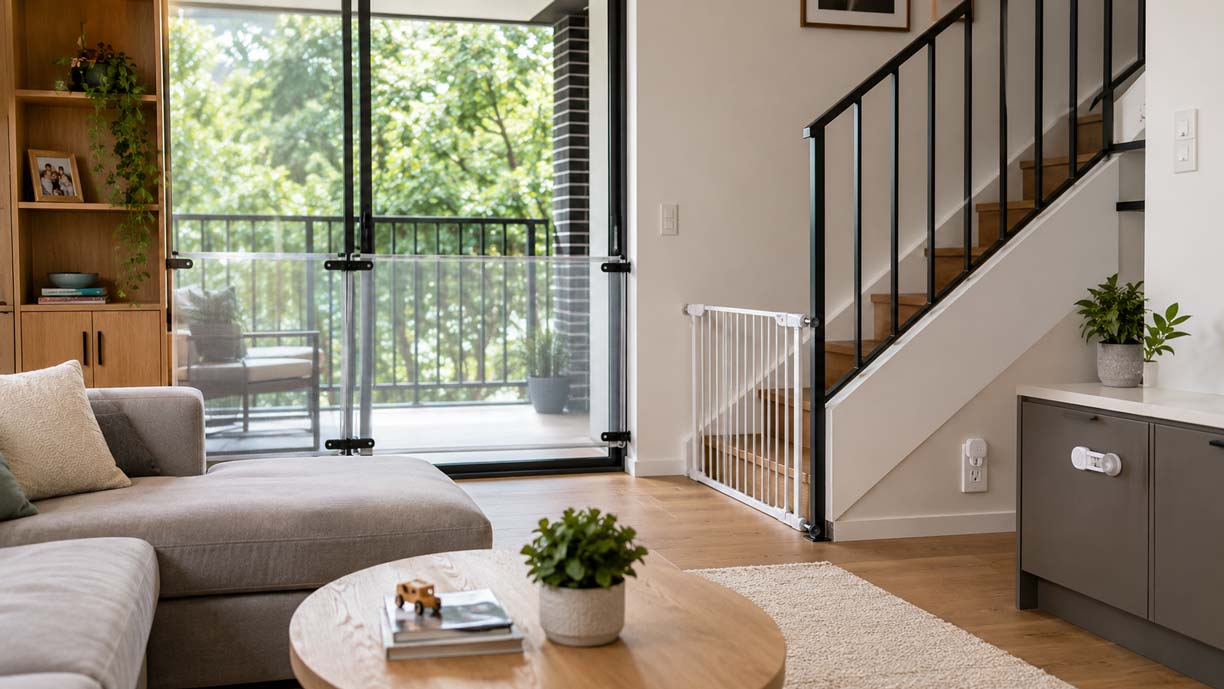
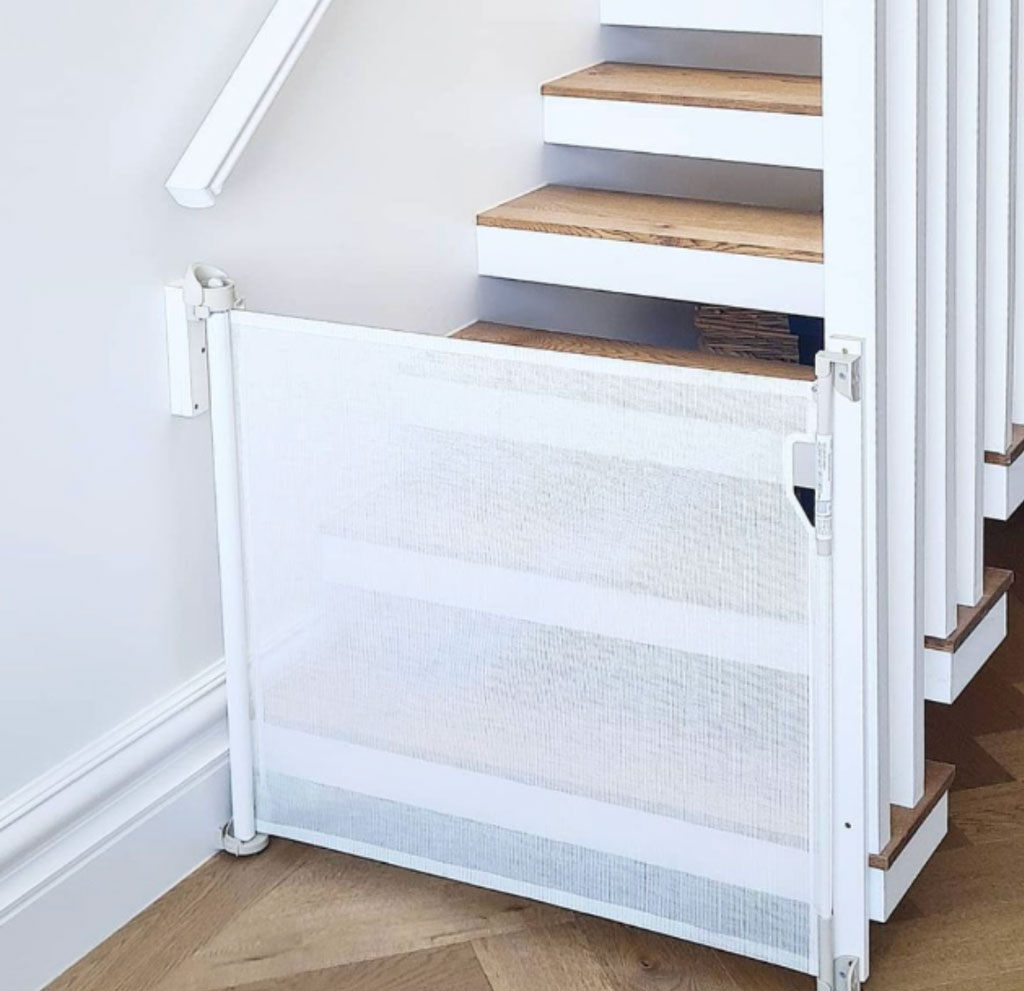
What works: Retractable mesh gates are particularly well-suited to grandparents’ homes. The mesh rolls completely into a side casing when not in use, leaving the doorway entirely clear, no bottom bar, no protruding hardware, no visual clutter. When the grandchild visits, the gate extends across the opening; when they leave, it disappears. For openings up to 140cm, this is often the most practical solution.
For narrower openings or stairways with awkward geometry, a flexi-fit hardware-mounted baby gate without a bottom bar is the alternative. Both options meet Australian and European safety standards.
The wrong choice here is a gate that the grandparent gradually starts stepping around, leaving open, or removing because it’s inconvenient. The right gate is one that fits the household’s actual habits.
Cupboards, Drawers and the Things You’d Forgotten Were There
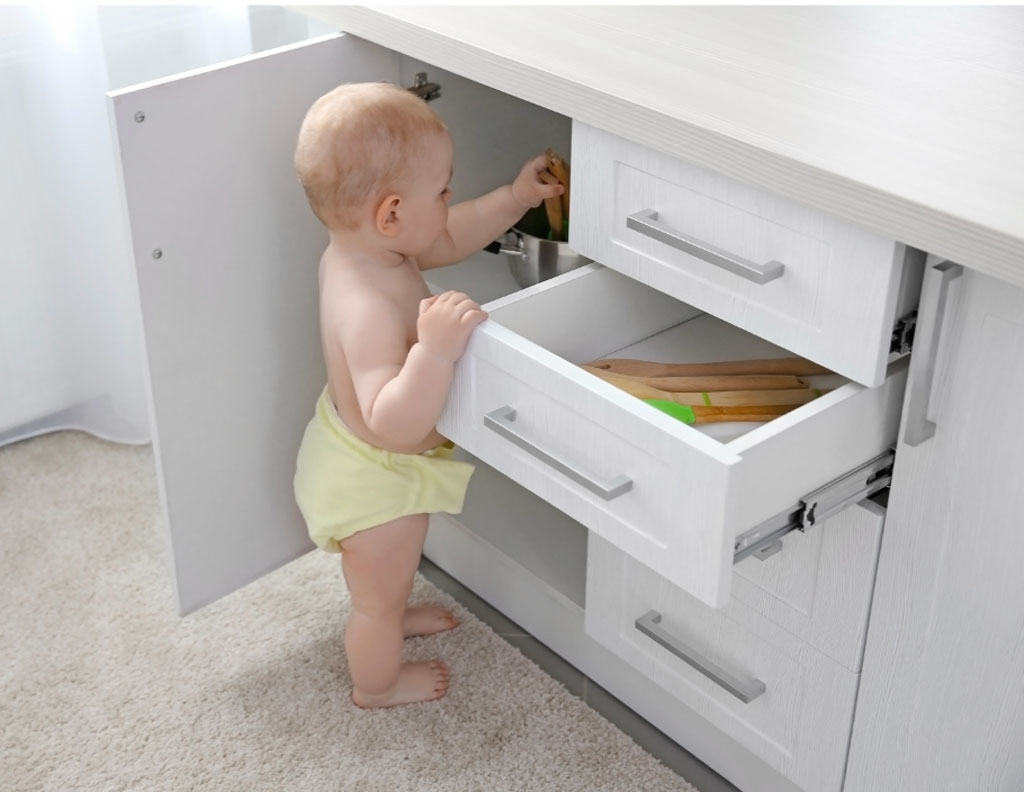
The contents of a long-established home are different from those of a young family’s home. Medications kept in a low bathroom drawer for convenience, cleaning products under the kitchen sink, sewing supplies in a sideboard, and decorative items in glass-fronted cabinets are all hazards a toddler will find within minutes.
The instinct is often to relocate everything to a high shelf. In a grandparent’s home, that creates a different problem; daily access becomes harder, and reaching up creates its own fall risk for older adults.
What works: Magnetic cupboard locks are invisible from the outside, require a magnetic key to operate, and don’t change the appearance of the kitchen or bathroom. For cupboards used multiple times a day, twist-and-lock latches or clip locks are quicker to operate while still being toddler-resistant. The right combination depends on which cupboards are used daily and which contain genuine hazards.
A walk-through identifies which cupboards need which level of protection; not every cupboard needs a lock, and locking everything creates friction that the household will eventually work around.
Windows, Blinds and Falls From Height
Window falls are one of the most serious preventable injuries in young children, and grandparents’ homes often carry a higher risk than newer family homes. Lower sill heights, sash windows that open fully, and older blind cord designs all contribute.
The risk increases when furniture sits beneath a window, a window seat, a sideboard, or even a sturdy armchair becomes a climbing platform for a toddler.
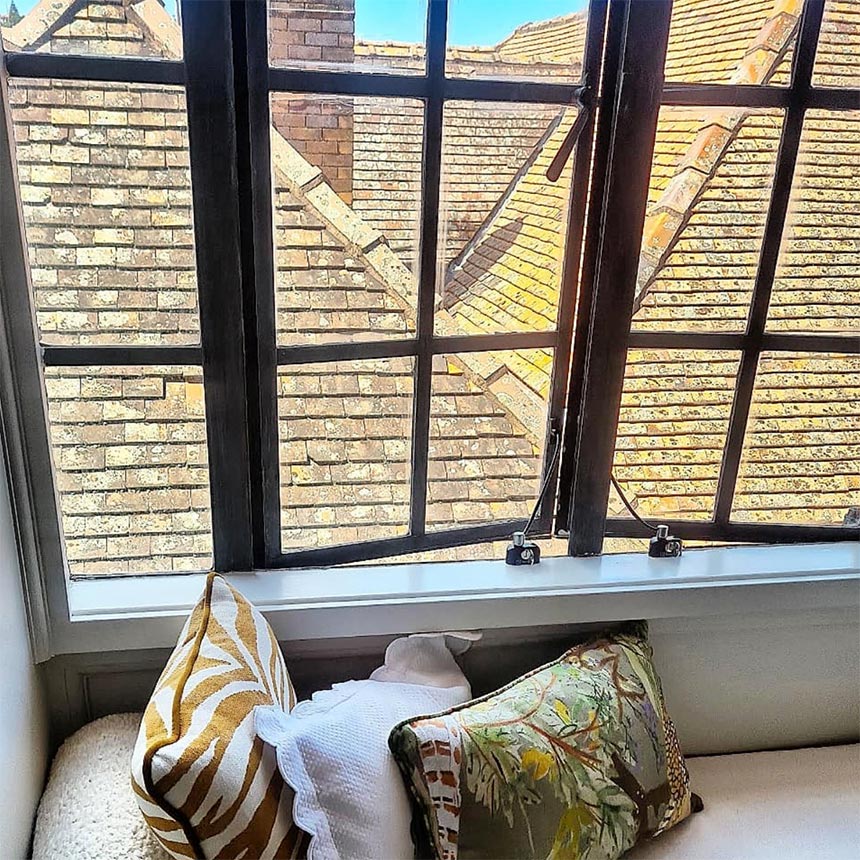
What works: Window cable locks restrict how far a window can open, allowing fresh air without creating a fall risk. They install with minimal visual impact and are removable when the grandchild visits less often. Blind cord tensioners eliminate the loop that creates a strangulation hazard with older blinds. Both are non-invasive solutions that don’t permanently alter the home.
For balconies, common in apartments where grandparents have downsized, Perspex safety barriers fit to the existing balustrade, eliminating gaps and climbing risks without structural change.
Furniture or a TV That’s Never Been Anchored
A heavy bookcase or chest of drawers that has stood in the same spot for twenty years feels permanent. To a toddler pulling out a lower drawer to climb on, it isn’t. Furniture tip-overs are one of the leading causes of serious injury and death in young children, and the heavier and older the piece, the worse the consequences.
This is rarely a conversation grandparents want to have. The bookcase has always been there. It has never moved. The grandchildren have visited before.
What works: Furniture anchoring straps attach the back of the furniture to a wall stud, preventing tip-over without changing the appearance of the piece from the front. Installation is straightforward, and the straps are removable. The pieces most often flagged during assessments are bookcases, chest of drawers, china cabinets, and free-standing wardrobes, particularly any piece with drawers a toddler can pull out as a climbing aid.
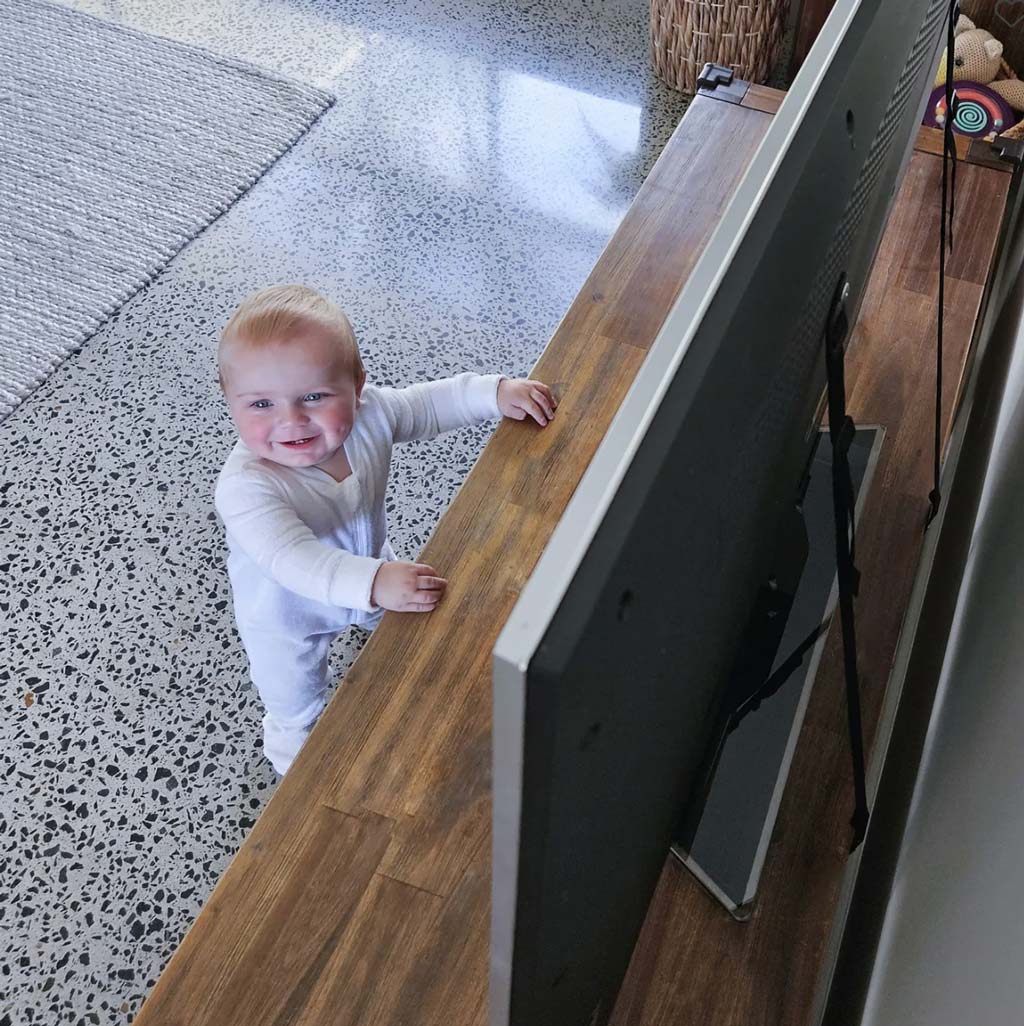
Televisions on stands rather than wall-mounted are a separate and equally serious risk. A TV safety strap is a quick, low-cost addition that prevents a foreseeable injury.
When the Grandchildren Visit Often, and When They Stay
There’s a difference between baby proofing for occasional weekend visits and baby proofing for regular weekday care. A grandparent who looks after their grandchild every Tuesday and Thursday while the parents work needs a setup that holds up to repeated use without becoming a daily nuisance.
The principle that runs through every recommendation: the safety system should make the day easier, not harder. Gates that operate one-handed, locks that the grandparent can engage and disengage without fuss, and barriers that retract or fold away when the grandchild isn’t there. The goal is a home that’s genuinely safe when the grandchild is in it and genuinely yours when they’re not.
For grandparents providing regular care, a comprehensive walk-through assessment covers every room and every transition point, entry doors, stairs, kitchen, bathroom, bedrooms, and outdoor access. Find out what professional baby proofing for a grandparent’s home in Sydney can cover.
A Note for the Adult Children Booking on a Parent’s Behalf
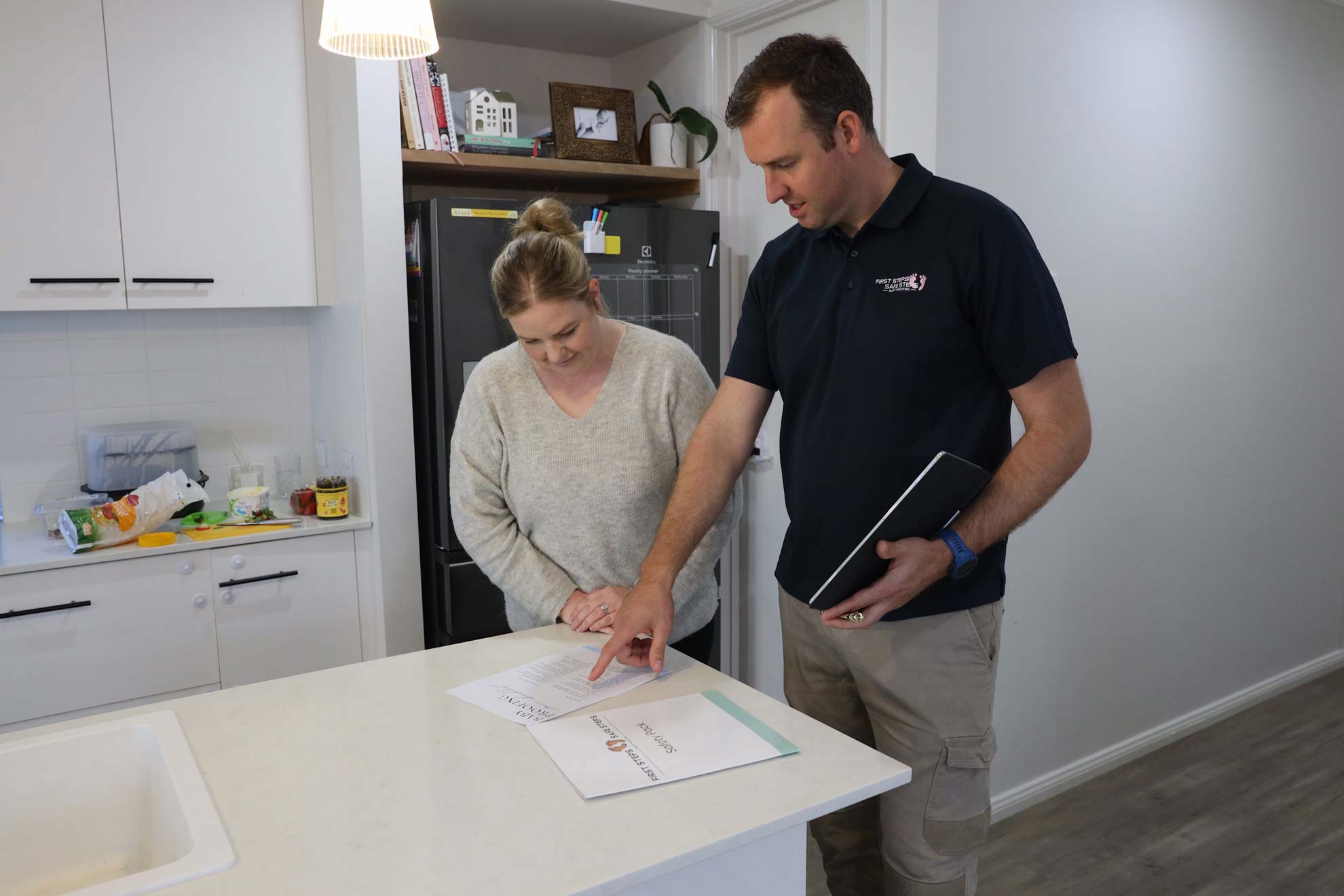
Often, the adult child of the grandparent is the one researching and booking the service. If that’s you, a useful approach is to frame it as a one-off assessment rather than a permanent change to the home. Mitchell visits, walks through the home with the grandparent present, identifies what’s needed, and discusses options; nothing is installed without agreement. The grandparent stays in control of the decisions about their own home.
This framing matters. A grandparent who feels their home is being criticised will push back, and rightly so. A grandparent who feels they’re being supported in keeping their grandchild safe will engage with the process.
What a Professional Walk-Through Covers
Mitchell has been baby proofing Sydney homes since 2014, and grandparent homes are a regular part of the work. As a Recommended Baby Safety Installer for DreamBaby and a partner of Rescueblue, Australia’s leading paediatric first aid provider, every assessment brings verified expertise and a focus on the specific hazards a grandparent’s home presents.
A walk-through covers the full home: entry and exit points, stairs, kitchen, bathroom, bedrooms, balcony or outdoor space, and any other area the grandchild will spend time in. Hazards are identified, solutions are recommended, and installation can typically happen the same day. Same-week appointments are available across Greater Sydney.
Book a baby proofing walk-through for your home, or call First Steps Safe Steps on 0490 413 147 to discuss your home safety needs today.
FAQs: Baby Proofing a Grandparent’s Home in Sydney
Do I really need professional baby proofing if my grandchild only visits occasionally?
It depends on what “occasionally” looks like and what hazards your home has. A grandchild who visits once a quarter for a few hours under direct supervision is a different scenario from one who visits every weekend or stays overnight. A short professional assessment identifies whether your home has the hazards that genuinely warrant intervention, so you’re not over-investing or under-protecting.
What’s the safest baby gate option for a grandparent’s home?
A hardware-mounted gate with no bottom bar is the appropriate choice for any stairway, and the better option in most doorways too. Retractable mesh gates and flexi-fit gates both eliminate the trip risk that traditional pressure gates with bottom bars create. For grandparents, where falls are a real concern, the choice of a baby gate matters more than in a younger household.
Can baby proofing be done without permanently changing my home?
Yes. Magnetic cupboard locks, window cable locks, blind cord tensioners, Perspex barriers, and retractable gates are all designed to be effective without permanently altering the home. Furniture anchors do require a small wall fixing, but they are removable and leave only a minor mark. A professional walk-through can prioritise the discreet, removable solutions wherever possible.
My grandchild’s parents are very anxious about safety. How do I reassure them?
A professional, documented baby proofing assessment is one of the most effective ways to demonstrate that you’ve taken the safety of their child seriously. Many parents find that knowing their child’s grandparent has had the home professionally assessed by an experienced installer, particularly one affiliated with DreamBaby and Rescueblue, significantly eases their anxiety about weekday care or overnight stays.
My home has stairs, and I’m worried about my own tripping risk. What are my options?
A gate with no bottom bar is the only appropriate choice at the top of any stairway, and especially in a home where older adults use the stairs daily. Retractable mesh gates roll into a side casing when not in use, leaving the doorway completely clear. Flexi-fit hardware-mounted gates without a bottom bar are the alternative for narrower openings. Both options eliminate the trip risk that traditional gates create.
How long does a baby proofing assessment for a grandparent’s home take?
A typical walk-through takes around 60 to 90 minutes, depending on the size of the home and the number of hazards identified. Installation of any agreed solutions can usually happen the same day. Same-week appointments are available across Greater Sydney.
Will my home look child-proofed afterwards?
Not if it’s done well. The aim of a grandparent-focused baby proofing assessment is to address the hazards while keeping the home looking and feeling like the grandparents’ home. Magnetic locks are invisible, retractable gates disappear when not in use, Perspex barriers are nearly transparent, and furniture anchors sit behind the furniture out of sight. The goal is safety without permanent visual change.