

There’s a moment most parents recognise. You’re watching your baby shuffle across the floor, reaching for anything within arm’s length, and you suddenly see your home with completely different eyes. The kitchen cupboard under the sink. The laundry basket tucked beside the washing machine. The bathroom vanity with the sliding door that’s never quite latched properly.
Baby proofing is often thought of in terms of physical hazards: stairs, sharp corners, power points. But chemical hazards are just as real, and they’re far easier to overlook. Products you’ve kept in the same spot for years, products that look harmless, products that don’t even look like products at all, can pose a serious risk to a baby or toddler who gets into them.
This guide walks through the most common chemical hazards hiding in Sydney homes, where they tend to live, and what baby proofing solutions actually work.
Why Chemical Hazards Catch Parents Off Guard
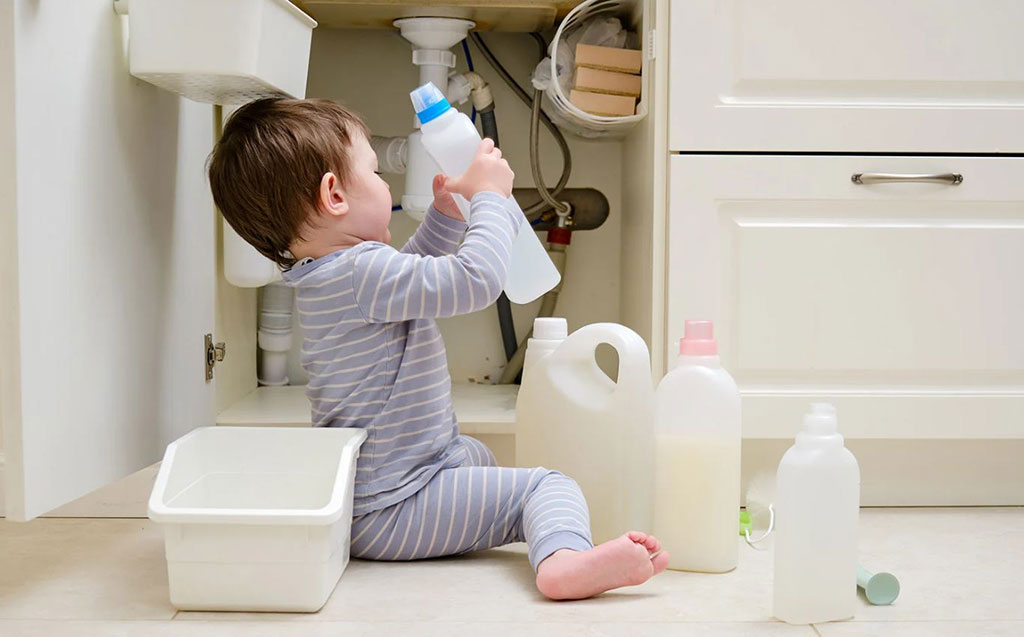
Unlike a staircase or a sharp bench edge, chemical hazards don’t announce themselves. A brightly coloured dishwasher tablet looks interesting to a curious ten-month-old. A low shelf in the garage smells strange but is easy to reach. The bathroom bin with cotton pads soaked in nail polish remover is right at floor level.
The other factor is familiarity. Parents often overlook the things they use every day. Cleaning sprays, vitamins, medications, and garden products all become background noise in a busy household. But to a baby who has just discovered the world is full of things to touch, taste, and pull apart, those same products are genuinely fascinating.
This is where a professional baby proofing walk-through makes a real difference. An independent assessment sees your home without the filter of familiarity. Hazards that have blended into the background for years become visible again.
The Most Common Chemical Hazards in a Sydney Home
Before getting into individual rooms, it helps to see the full picture. These are the products most frequently identified during baby proofing assessments as chemical hazards parents hadn’t thought to address:
- Kitchen: dishwasher pods, surface sprays, drain cleaner, oven cleaner, dishwashing liquid, bleach-based wipes
- Bathroom: prescription and over-the-counter medications, vitamins and supplements, mouthwash, nail polish remover, hair dye, toilet cleaner
- Laundry: laundry liquid and powder, fabric softener, stain remover, bleach, laundry pods, pest control products
- Garage and garden shed: motor oil, pesticides, herbicides, fertilisers, pool chemicals, solvents, paints, and unlabelled containers
- Living areas and bedrooms: hand sanitiser, cosmetics, reed diffusers, candles, batteries (particularly button batteries), and any bag left on the floor
The list is longer than most parents expect. What makes it manageable is approaching it systematically, room by room, with solutions that actually hold up as your child grows.
Room by Room: Where Chemical Hazards Hide
The Kitchen
The kitchen is one of the highest-risk rooms in any home, and not only because of the cooking appliances. The cupboard under the sink is almost universally used to store cleaning products: dishwashing liquid, surface sprays, drain cleaner, and oven cleaner. Many of these are caustic and highly dangerous if ingested even in small amounts.
How to Babyproof your Kitchen?
Dishwasher tablets and pods are a specific concern. Their compact size and bright packaging make them appealing to small children, and the concentrated detergent inside can cause serious harm.
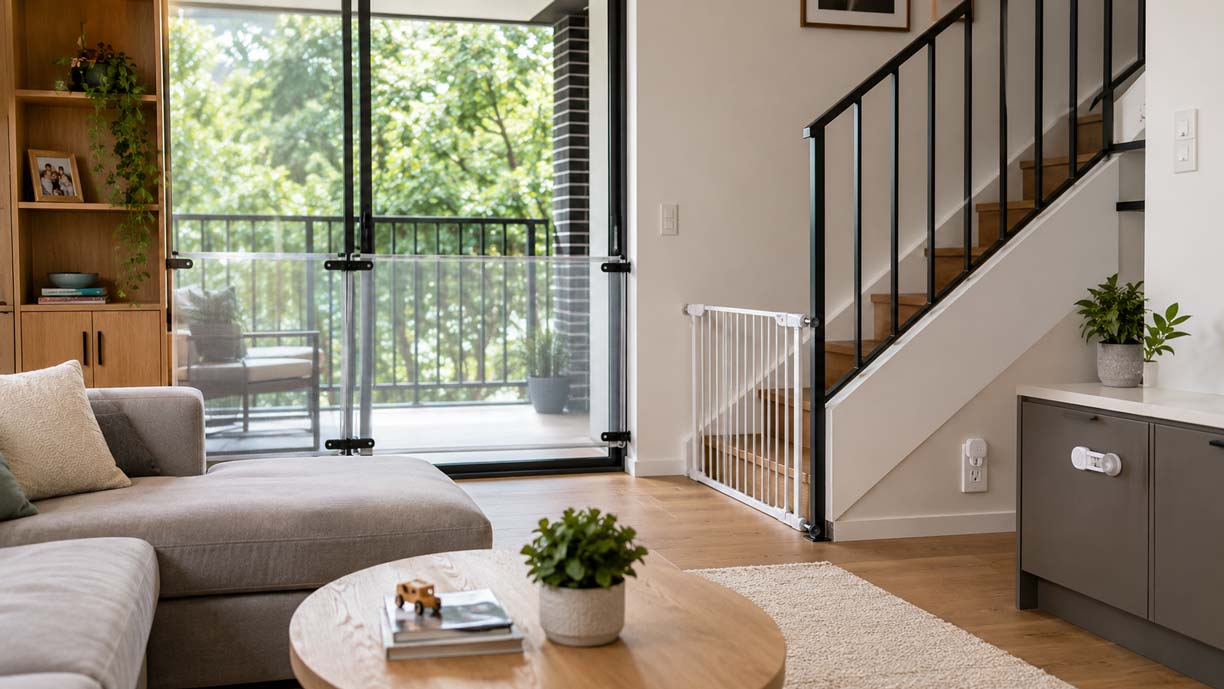
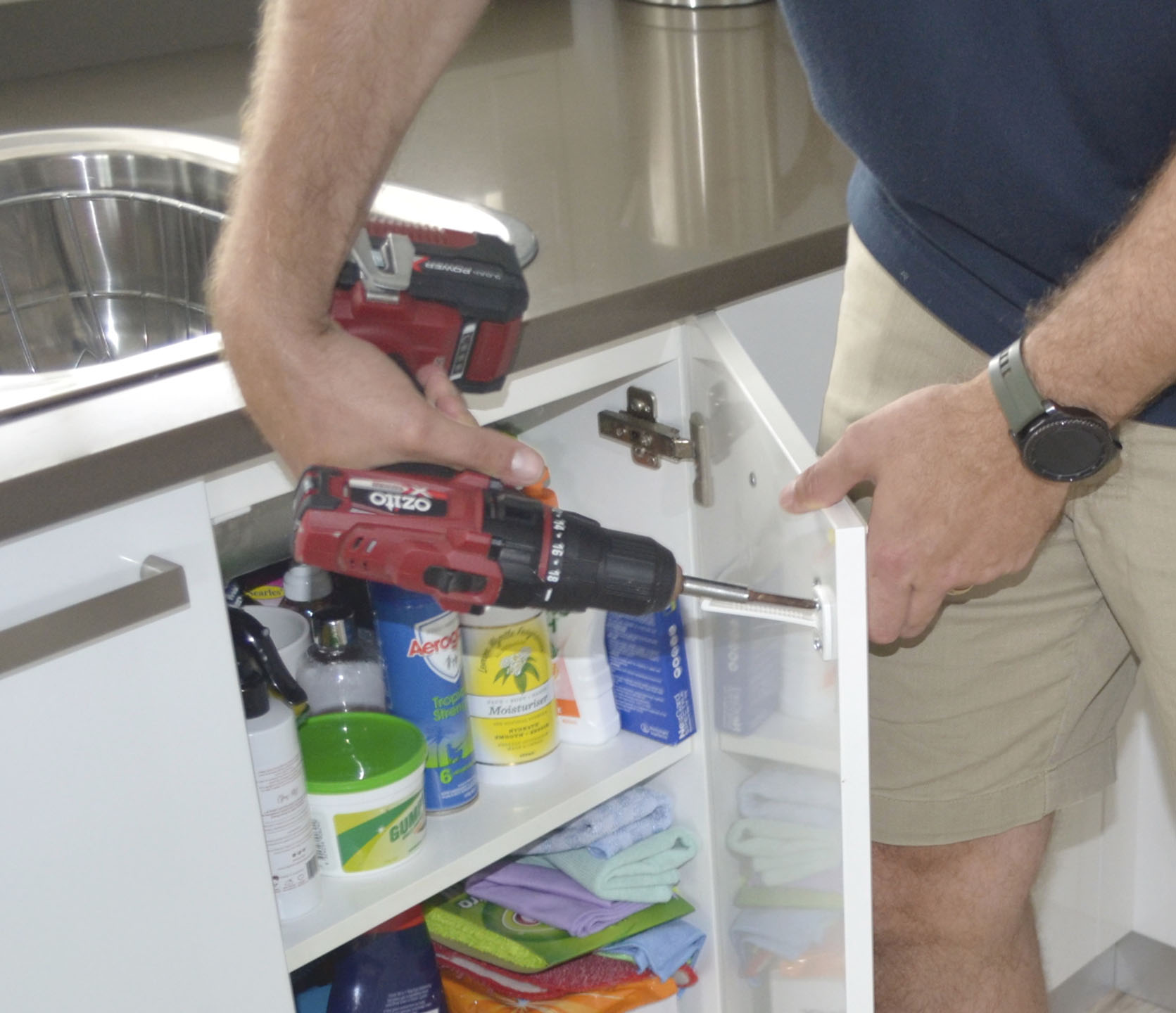
What works: Magnetic child safety locks on kitchen cupboards are one of the most effective solutions available. Unlike traditional push-and-turn locks, magnetic locks are invisible from the outside, require no awkward manoeuvring for adults, and provide a reliable barrier that toddlers cannot override. In a rented property, adhesive-mounted versions are available that leave no permanent damage to cabinetry.
Decanting products to higher shelves is a good start but not a complete solution. Babies become toddlers quickly, and toddlers climb. Locks on the cupboards that store chemical products are the most reliable line of defence.
The Bathroom
The bathroom carries a surprising number of chemical hazards for its size. Medications, both prescription and over-the-counter, are among the most dangerous substances in any home if accessed by a child. Vitamins and supplements, while appearing benign, can be toxic in quantities a toddler might consume. Cleaning products, mouthwash with alcohol content, nail polish remover, and hair dye all fall into the same category.
The bathroom vanity is often a toddler’s first stop when the door is left open. Storage directly under the sink, low shelving, and open bins all need to be addressed as part of any thorough baby proofing assessment.
What works: Magnetic locks on vanity cupboards work just as effectively here as in the kitchen. For medications specifically, a lockable cabinet mounted above reach height is the gold standard. Products stored in open baskets or on low shelves should be relocated entirely.
Door handle covers and privacy locks turned to prevent entry are also worth considering for bathrooms with younger babies, particularly where the bathroom cannot be continuously supervised.
The Laundry
Laundry products are among the most concentrated household chemicals in any home. Laundry liquid and powder, fabric softener, stain remover, and bleach are all commonly stored at floor level, often in the same low cupboard or on a shelf below the benchtop.
How to Babyproof Your Laundry Room?
Laundry pods carry a specific risk similar to dishwasher pods: they are small, colourful, and highly concentrated. A child who bites into one is exposed to a high dose of detergent almost instantly.
The laundry is also often where pest control products are kept, along with pool chemicals in homes where access to the laundry doubles as access to the outdoor area.
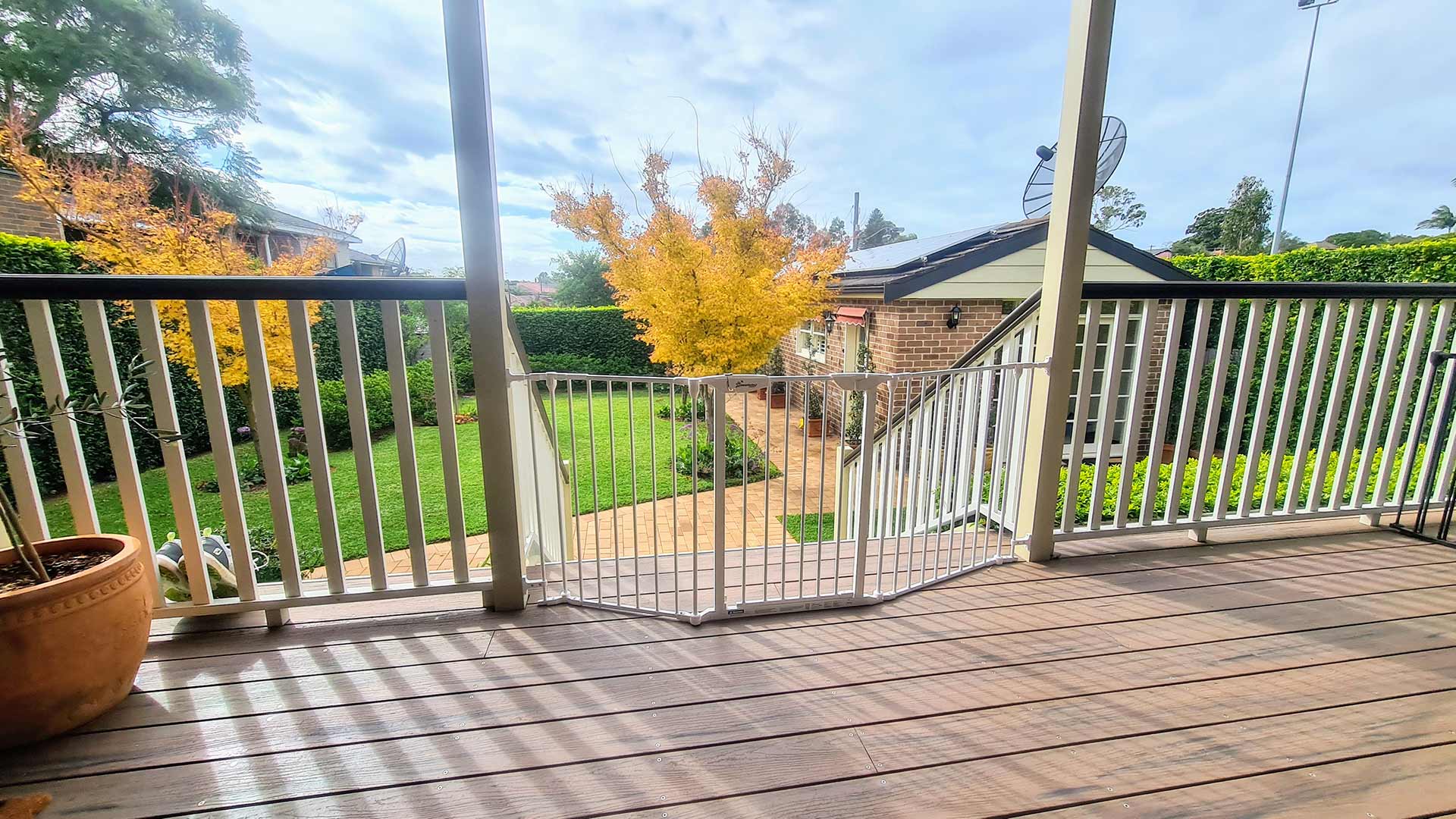
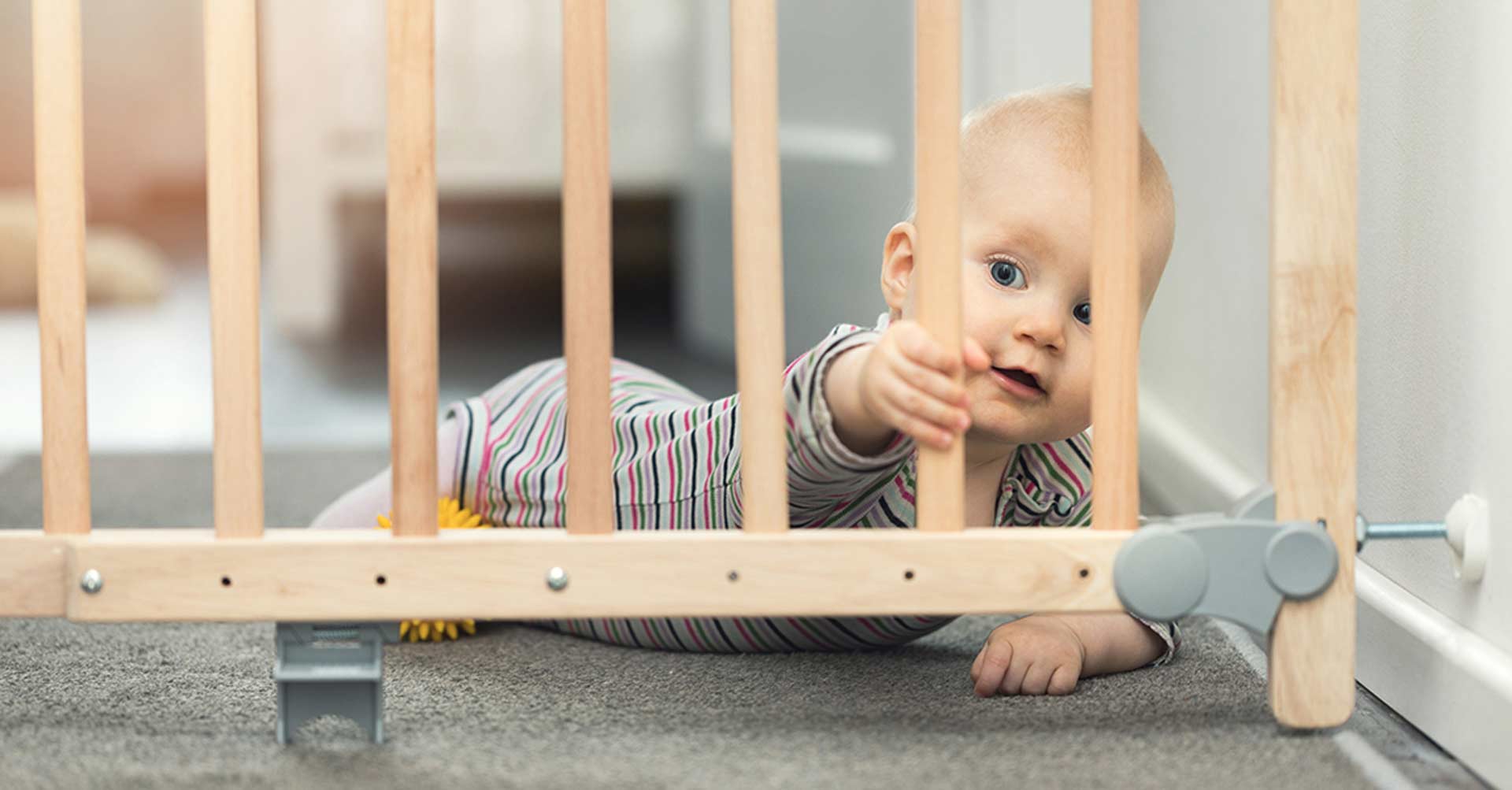
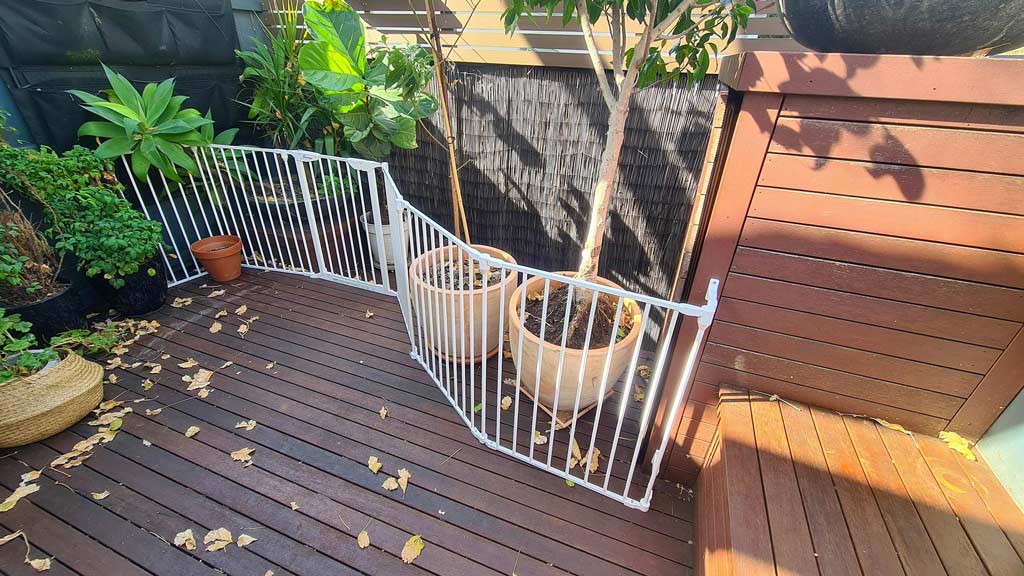
What works: Magnetic cabinet locks and high-mounted shelving are both appropriate here. If the laundry opens directly to an outdoor or garage area, a baby gate at the laundry entrance can provide an additional layer of protection by restricting access entirely.
The Garage and Garden Shed
This is the area most parents mentally file under “I’ll deal with that later,” and it’s one of the most hazardous spaces in the home. Garages and garden sheds typically store motor oil, pesticides, herbicides, fertilisers, pool chemicals, solvents, and paints. Many of these products are stored in unlabelled or relabelled containers, which increases the risk further.
Babies and toddlers don’t often have unsupervised access to a garage, but this can change quickly. A door left ajar during a weekend project, a child who has learned to open a handle, or an older sibling who doesn’t think to close the door behind them are all realistic scenarios.
What works: A self-closing baby gate at the garage entrance is one of the most practical solutions for homes where the garage is accessed through an internal door. Child-resistant locks on storage cupboards within the garage, combined with products stored at height wherever possible, significantly reduce the risk.
Handbags, Nappy Bags, and Visitors’ Belongings
This one surprises parents. The family home has been carefully assessed and locked down. Then a bag is left on the floor during a visit.
Handbags routinely contain medications, hand sanitiser, vitamins, mints or lollies with xylitol, cosmetics, and other products that are harmful to young children. The same applies to nappy bags and any bag brought into the home by a visitor.
This is not something a lock can solve. It requires a household habit: bags go on a surface above reach, not on the floor. It’s a simple rule, and one worth sharing with regular visitors and grandparents.
When There Are Older Children in the Home
Baby proofing a home with older siblings adds a layer of complexity that’s easy to underestimate. A five-year-old who can safely use the bathroom independently doesn’t think to close the vanity cupboard after themselves. A primary schooler’s craft supplies, including glue, markers, and hobby paints, are chemicals too. Lunchboxes and school bags left on the floor often contain snacks, medications, or small items that pose a risk to a younger sibling.
The solution isn’t to restrict older children but to establish clear household habits and physical barriers where they make sense. Baby gates on rooms that older children can open and close independently are particularly useful here. The goal is a system that works for the whole household, not just the youngest member of it.
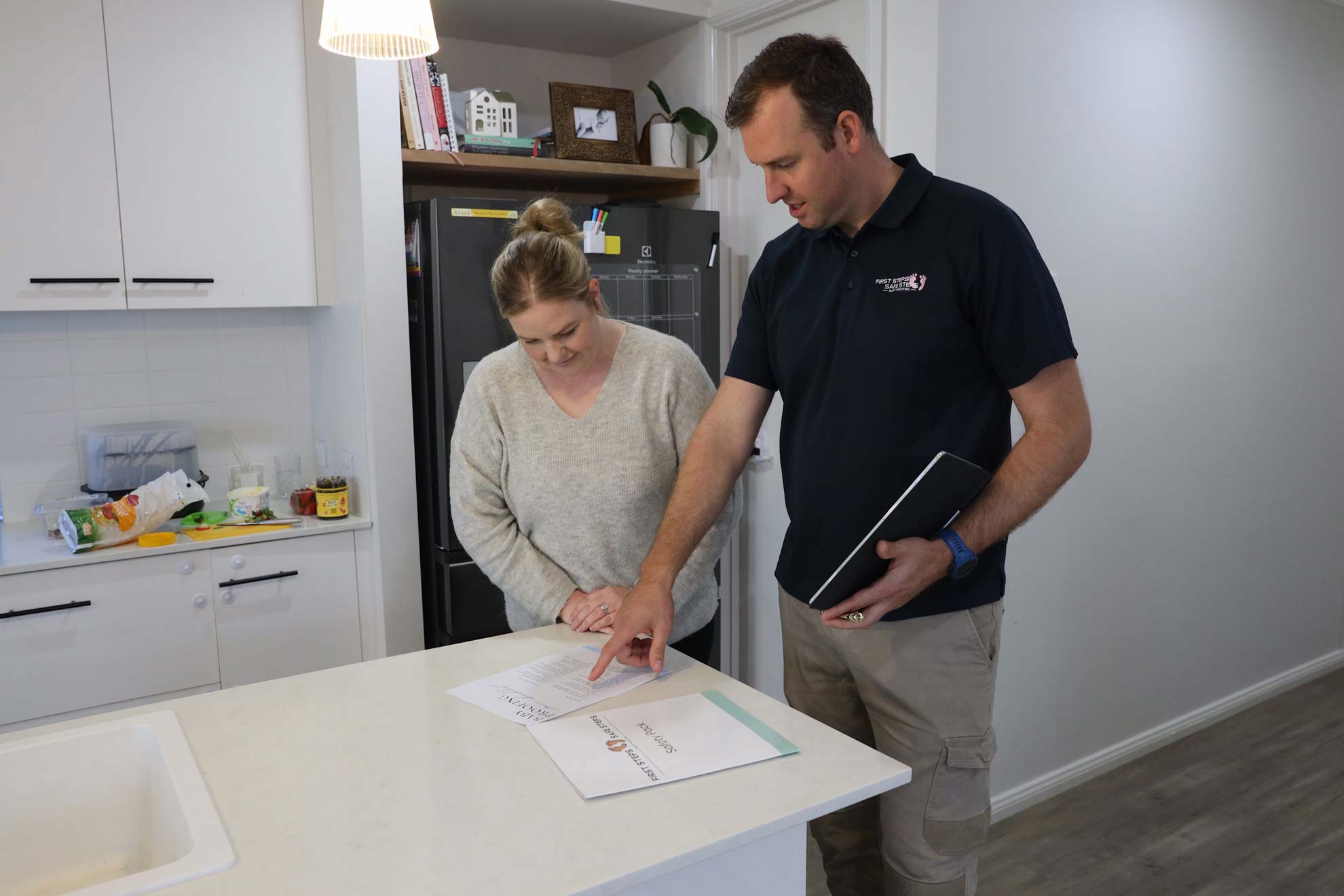
A professional baby proofing assessment takes the whole family dynamic into account. Mitchell will note where older siblings’ routines create gaps in the safety setup and recommend solutions that don’t disrupt the household unnecessarily.
A Note on Poison Safety in Australia
If you suspect your child has been exposed to a chemical or has ingested a household product, contact the Poisons Information Centre on 13 11 26. This line operates 24 hours a day, seven days a week across Australia. Keep the number saved in your phone and posted somewhere visible in your home.
In the case of an emergency, call 000 immediately.
Baby Proofing Chemical Hazards: The Bigger Picture
Individual locks and relocated products are important steps. But baby proofing works best when it’s approached as a whole-home system rather than a series of individual fixes.
When Mitchell from First Steps Safe Steps completes an in-home safety assessment, chemical storage is reviewed as part of a comprehensive walk-through that covers every room, not just the obvious ones. Products are assessed in context: where they are stored, whether the storage is accessible, whether locks are appropriate, and whether the overall setup holds up as the child grows and becomes more mobile.
As a Recommended Baby Safety Installer for DreamBaby and a partner of Rescueblue, Australia’s leading paediatric first aid provider, First Steps Safe Steps brings a level of expertise that goes beyond simply fitting locks. The assessment is tailored to your home, your products, and your family’s specific situation.
Starting the Conversation
Chemical hazard baby proofing isn’t something most parents think to ask about specifically. It tends to come up during a walk-through, when someone who knows what to look for walks through your laundry, opens the cupboard under the sink, or notices the handbag on the hall floor.
That’s exactly the value of a professional assessment. You find out what you didn’t know to look for.
If your baby is on the move, or will be soon, now is the right time to get your home properly assessed. Same-week appointments are available across greater Sydney.
Book your in-home baby proofing assessment or find out more about our professional baby proofing services across Sydney.
Frequently Asked Questions: Baby Proofing Chemical Hazards
What are the most dangerous chemical hazards for babies at home?
Medications are consistently the highest risk, including common products like paracetamol and iron supplements. Laundry and dishwasher pods are also high-risk due to their concentrated content and appealing appearance. Garage and garden products, including pesticides and pool chemicals, are a close third.
At what age should I start baby proofing for chemical hazards?
Before your baby starts crawling, ideally between four and six months of age. Chemical hazards don’t require a fully mobile child to be a risk. A baby who can roll or reach from the floor is already in range of a low cupboard.
Are magnetic cabinet locks effective enough for chemical storage?
Yes. Magnetic locks cannot be opened without the magnetic key and have no external mechanism for a toddler to manipulate. They are a significant upgrade on traditional push-and-turn locks, which older toddlers can sometimes learn to defeat.
How do I baby proof chemical hazards in a rental property without losing my bond?
Adhesive-mounted magnetic locks work on most cabinetry and remove cleanly when the lease ends. Pressure-mounted gates restrict access to high-risk rooms without wall fixings. A renter-specific assessment can confirm which solutions are appropriate and what requires landlord consent under NSW regulations.
What should I do if my child gets into a chemical product?
Call the Poisons Information Centre immediately on 13 11 26, available 24 hours a day across Australia. Do not wait for symptoms before calling. If your child is unconscious or having difficulty breathing, call 000.
Do I need to baby proof the garage if my child can’t open the door yet?
Yes. Door-opening ability develops quickly, and garage access can happen through other means, such as a door left ajar, an older sibling, or a visitor. Physical barriers and locked storage should be in place well before your child reaches that stage.
Can older children create chemical hazard risks for younger siblings?
Yes. Older children move independently and don’t always close cupboards or put bags away. School bags, craft supplies, and lunchboxes can all contain items that pose a risk to a younger sibling. A whole-home assessment accounts for sibling dynamics as part of the safety plan.
Is a professional assessment worth it if I’ve already moved some products out of reach?
Relocating obvious products is a good start but rarely captures everything. A professional walk-through covers the rooms and scenarios easy to miss, including the laundry, the garage, and products that have been in the same spot for so long they’ve stopped registering as hazards.