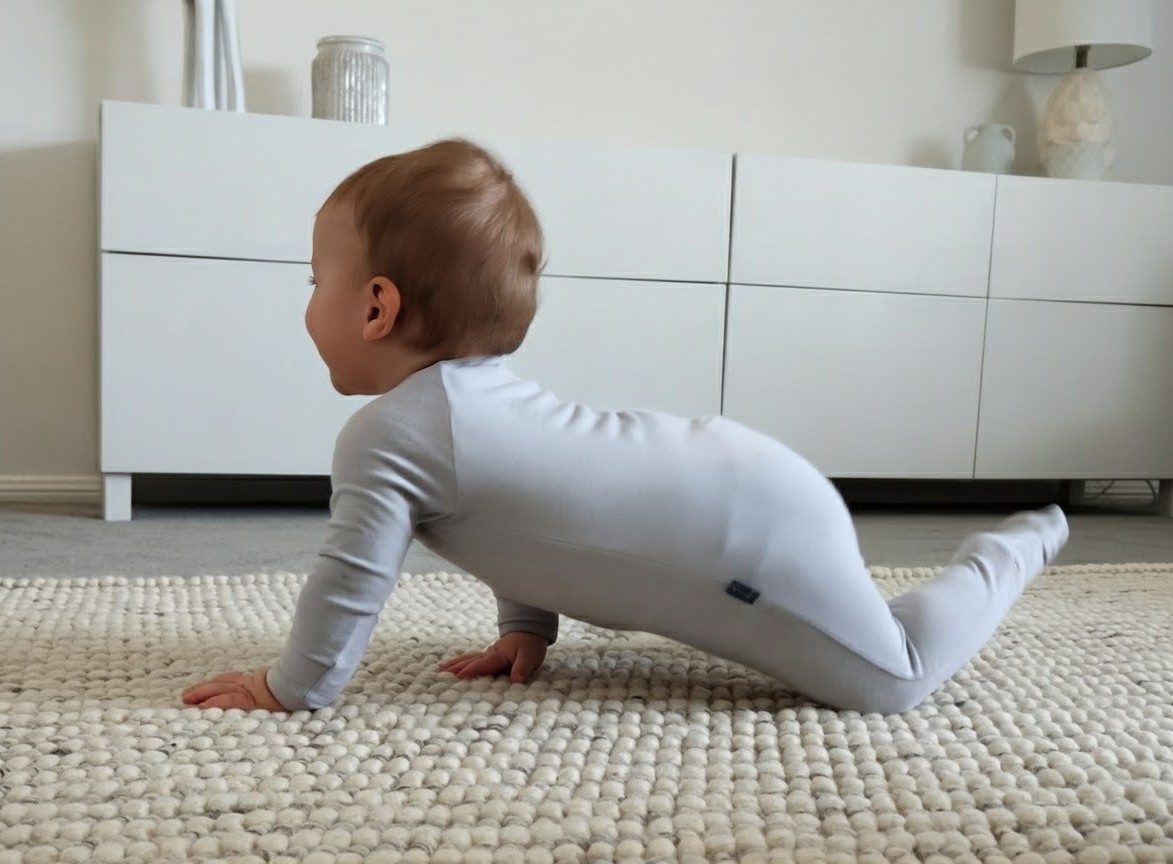


Every parent knows that moment when their baby suddenly does something they didn’t see coming. One day, they lie peacefully on a play mat, the next, they’ve rolled over. Soon after, they’re pulling up on the coffee table, reaching for cabinet doors, or dragging a chair across the kitchen floor. These milestones are exciting, but they arrive fast, often before parents feel ready.
That’s why the real challenge isn’t just making your home safer. It’s knowing what to buy, and when to buy it. Purchase too early and products sit unused for months. Wait too long, and you’re rushing to install safety equipment after your child has already discovered a hazard.
This guide is not another general babyproofing tips article. It’s a buying roadmap, built around how children actually develop, and how parents actually shop.
Understanding Development-Driven Risk for Babies and Toddlers
Babies do not become mobile overnight. Hazards appear gradually, then accelerate. A rolling infant presents different risks to a climbing toddler. Purchasing with development in mind keeps safety proactive rather than reactive.
We plan buying across four practical stages:
- Pre-mobile infant
- Crawling and pulling up
- Walking and climbing
- Independent toddler exploration
Each stage introduces predictable behaviour patterns. Matching products to these behaviours ensures every purchase has an immediate purpose.
Stage One: Pre-Mobile Infant (Newborn to Rolling)
During the first months, babies are mostly stationary. Risk comes less from movement and more from environmental setup. Falls from change tables, unstable furniture, unsafe sleep environments, and window hazards are the most common concerns.
Purchases in this stage focus on foundational home safety babyproofing, not movement restriction.
This is where furniture anchoring systems, window safety locks, blind cord wraps, and outlet protection come into play. Anchoring a tall dresser that sits beside the change table.
Adding a window restrictor to a nursery window. Wrapping blind cords that hang near a rocking chair. These quiet purchases remove risks before mobility begins.
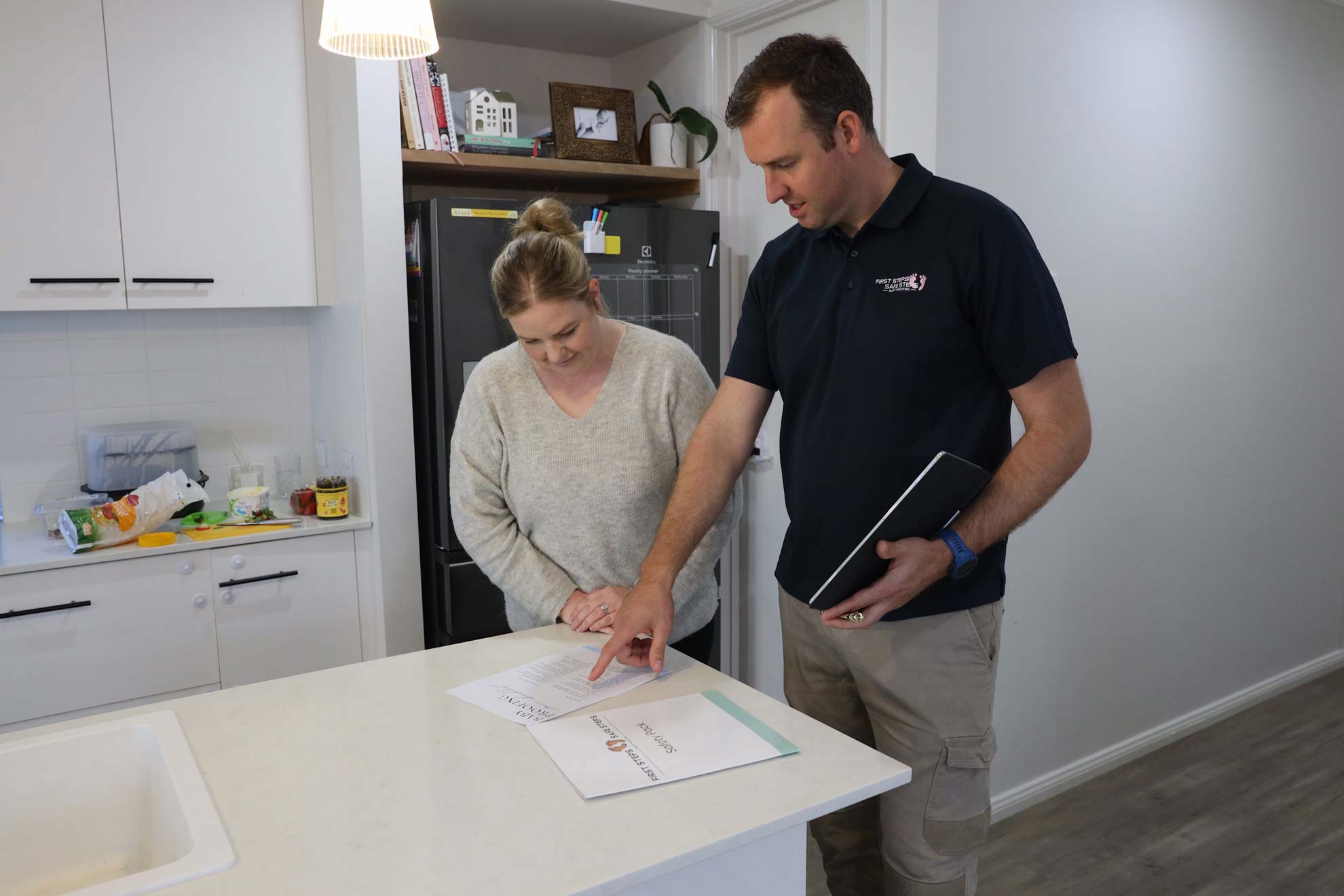
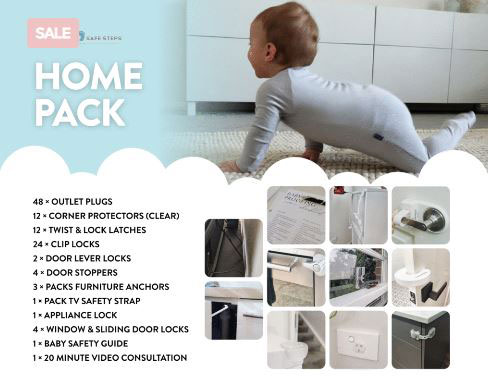
This is also the ideal stage to consider a whole-home safety assessment or a foundational babyproofing pack. Anchoring furniture early avoids later disruption, especially once your child starts pulling to stand.
Many parents delay these purchases until crawling begins. By then, hazards are already active. Planning ahead removes the pressure.
Stage Two: Crawling and Pulling Up
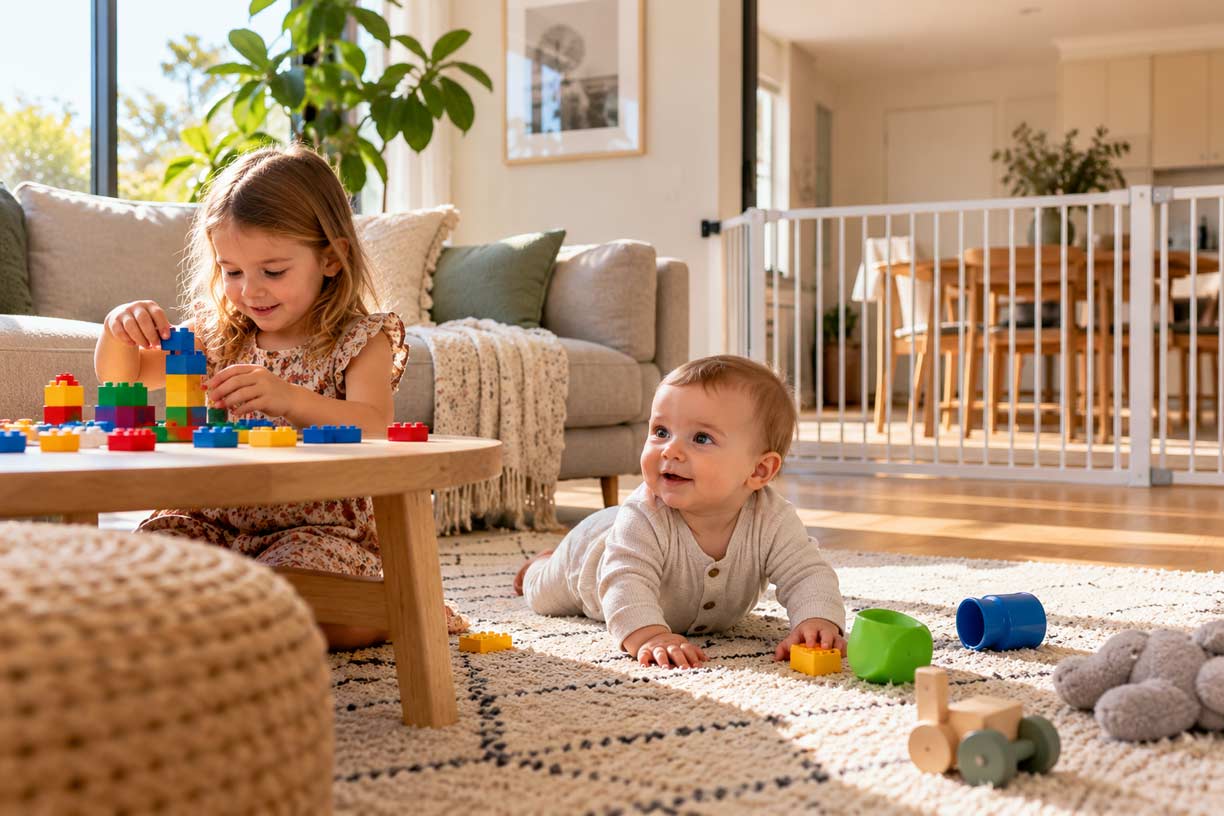
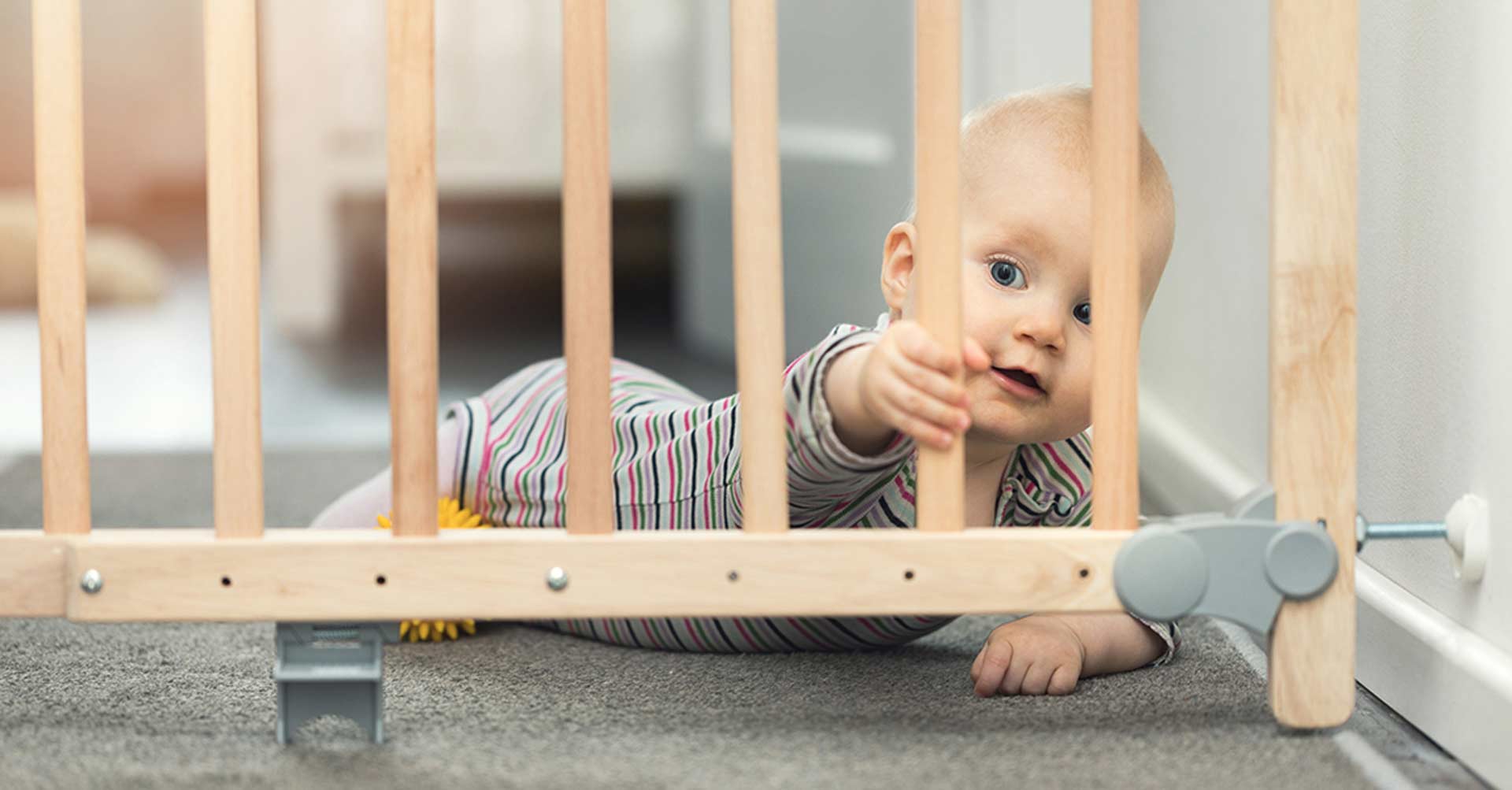
Once babies start rolling, scooting, or crawling, the hazard landscape changes rapidly. Curiosity develops before danger awareness. Access control becomes the priority.
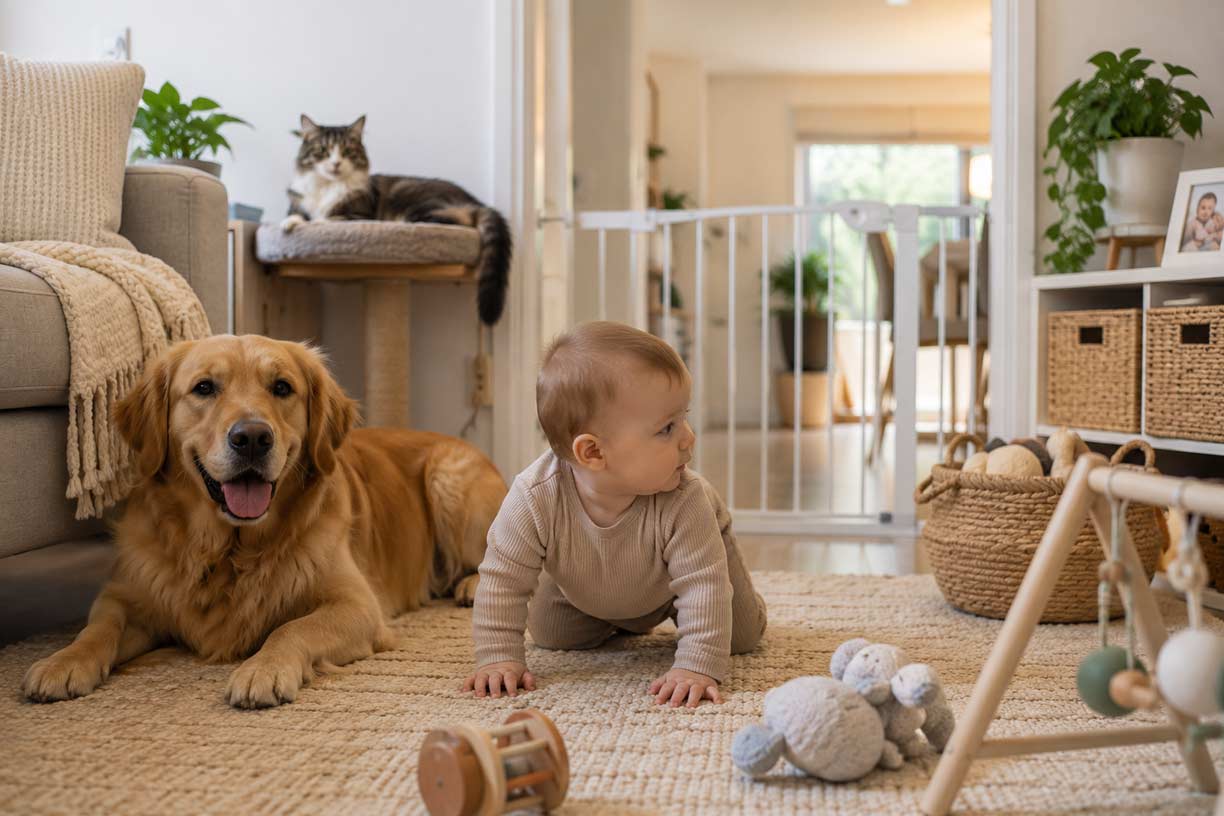
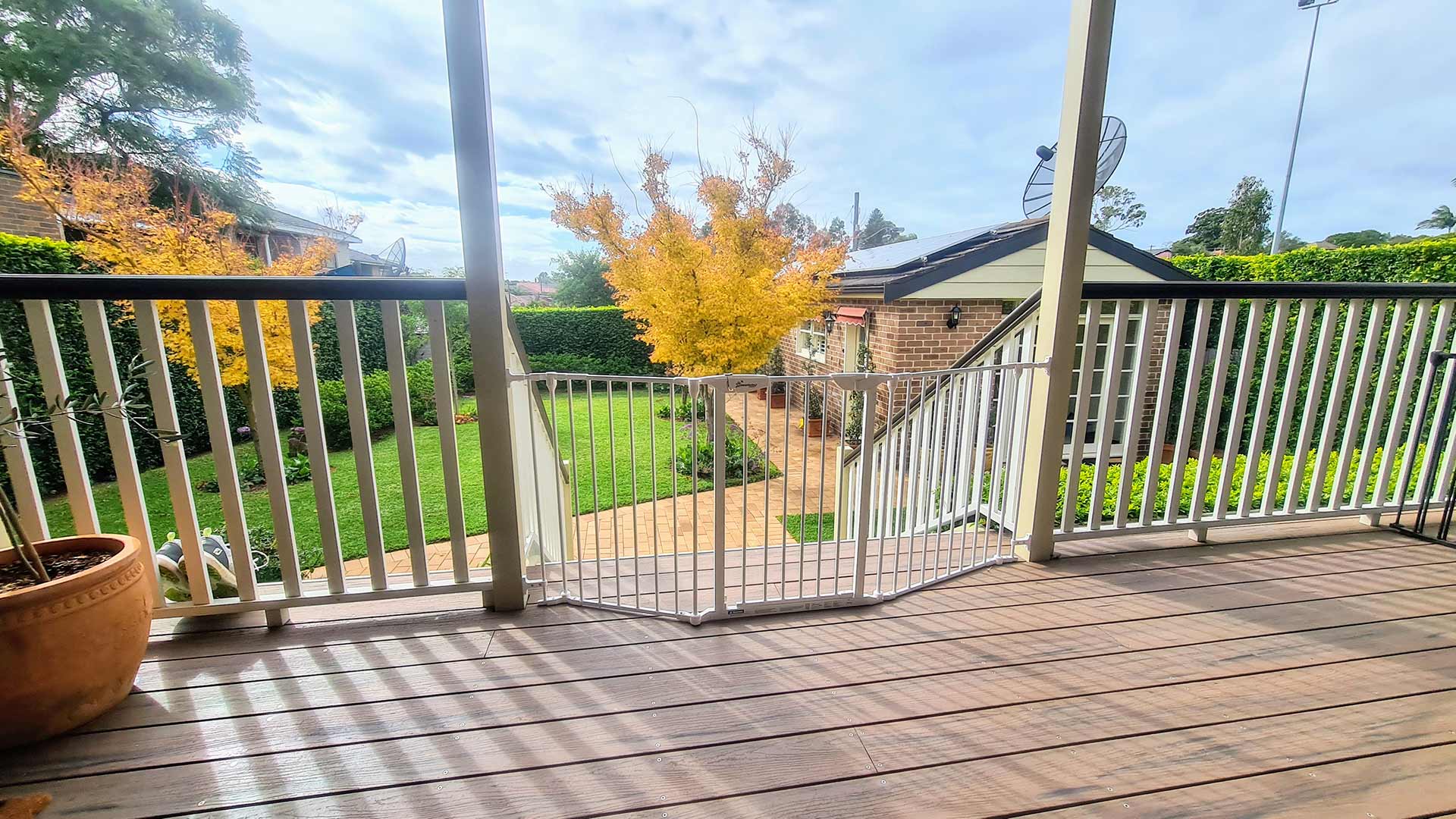
At this stage, purchasing focuses on barrier creation and access restriction. This is where baby gates, cabinet locks, door stoppers, and corner protectors for babies & toddlers become relevant.
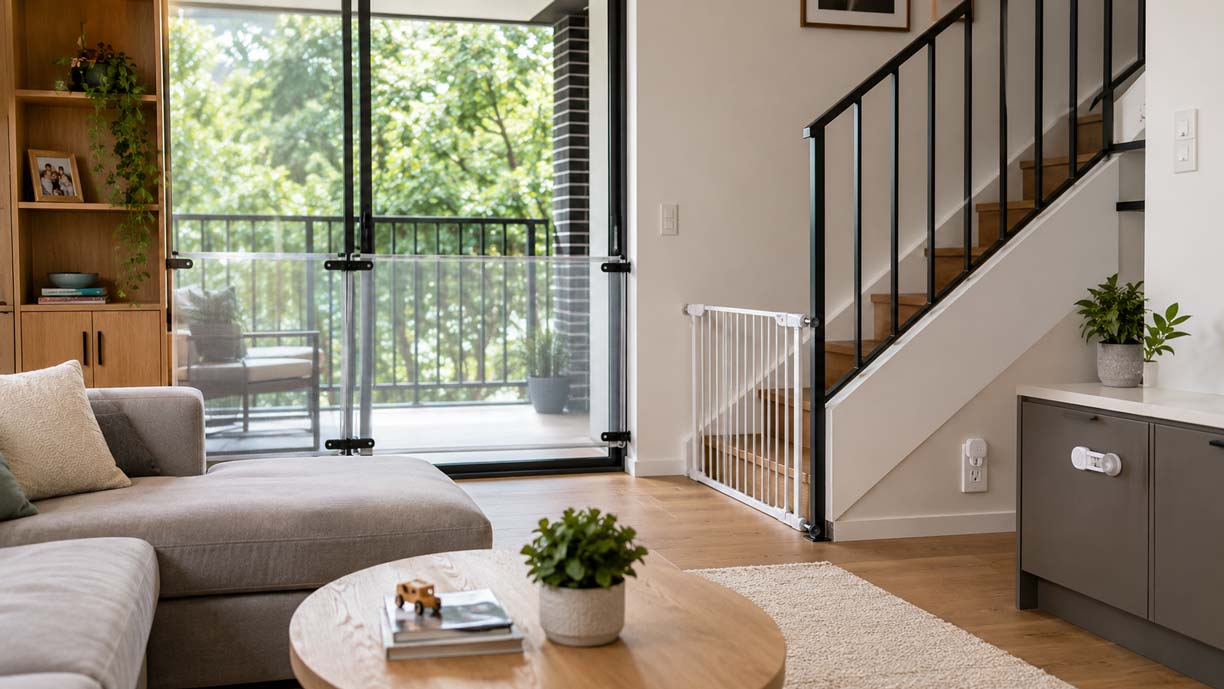
Gate selection is often where uncertainty begins. Different homes need different mounting styles. A top-of-stairs opening requires a hardware-mounted gate. A rental hallway suits a pressure-mounted gate. A wide open-plan living space may need a modular play-yard system. Buying the right gate type early prevents incorrect purchases and returns.
Cabinet locks become important once babies start opening doors. Magnetic locks suit sleek kitchen cabinetry. Slide locks suit bathroom vanities. Spring clips work well for lightweight drawers. Choosing the correct system avoids buying products that don’t fit your cabinetry.
This stage is also when parents begin purchasing room-specific safety packs. Kitchen babyproofing packs, bathroom packs, and stair packs group commonly needed items in sensible combinations. These bundles save cost and remove guesswork.
Stage Three: Walking and Climbing
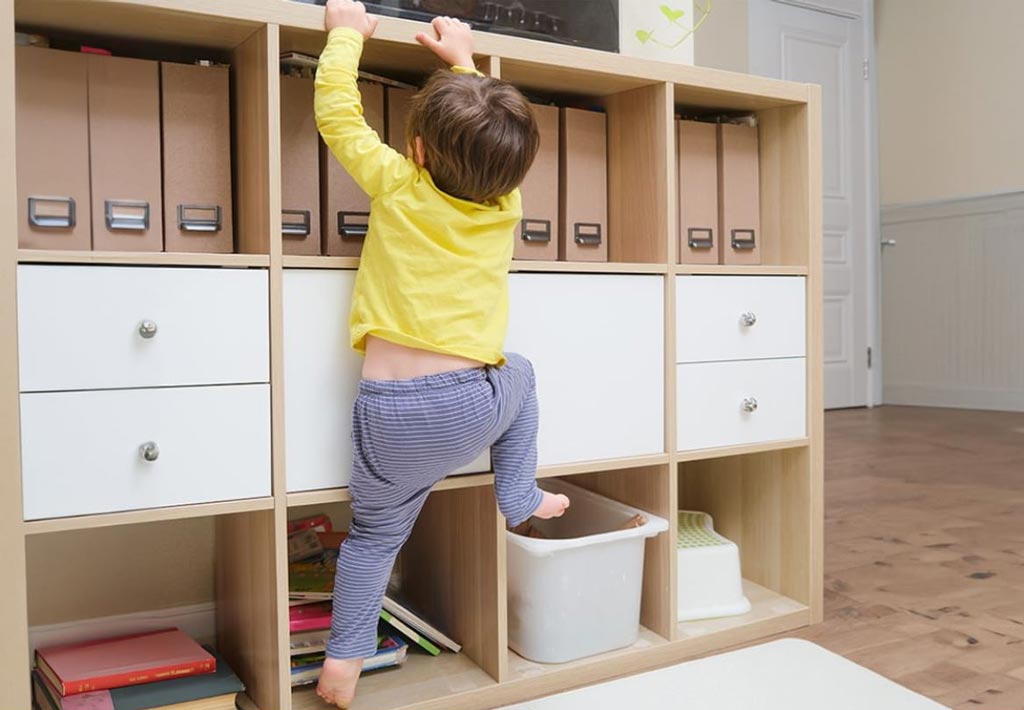
When children start walking, risk increases again. Reaching new heights, opening doors, climbing furniture, and exploring outdoor spaces introduce new hazards.
Purchases now focus on height access management and stability control.
Stair safety becomes essential. If not already installed, top-of-stairs gates become a priority. Door lever locks prevent wandering into unsafe rooms or out the front door. Two-way door stops protect small fingers from slamming doors. Furniture anchoring remains critical as climbing begins, especially for bookcases and television units.
Outdoor areas also enter consideration. Balcony door locks, sliding door restrictors, and garden shed latches may now become relevant depending on your home layout.
At this stage many families choose to expand their original babyproofing pack rather than buying individual items one by one. Bundled toddler packs typically include multi-room coverage for gates, cabinet locks, door hardware, and anti-tip systems.
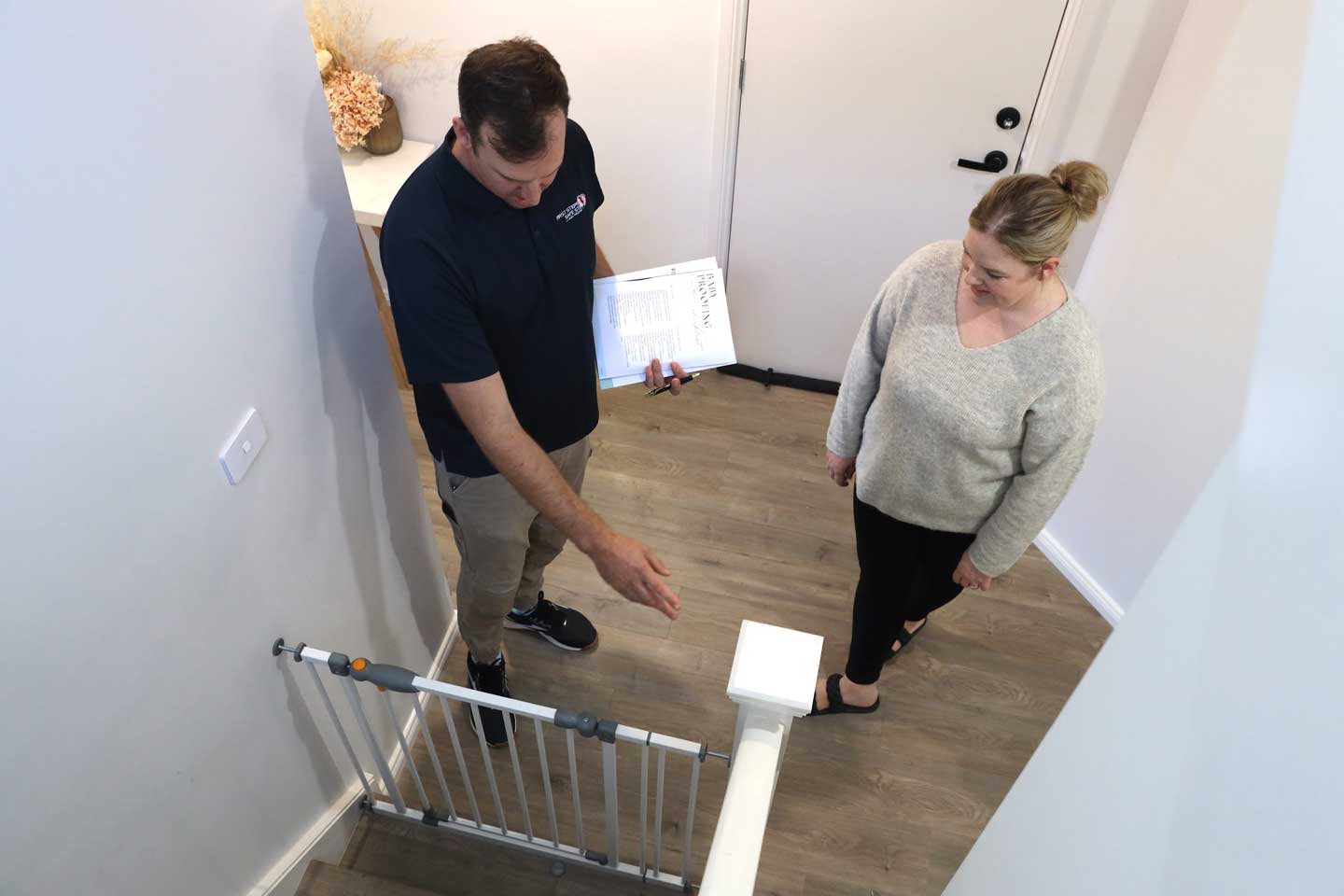
This is also the point where parents start asking whether DIY installation is manageable or whether professional installation would save time and frustration. Choosing products that support professional installation keeps that option open.
Stage Four: Independent Toddler Exploration
Toddlers combine mobility, curiosity, and confidence. They climb, open, drag furniture to reach benches, and test every boundary. The goal now is reinforcing existing safety layers and adding targeted protections.
Purchases at this stage often include additional gates for outdoor transitions, sliding door safety locks, window restrictors, appliance safety locks, and more advanced cabinet locking systems for high-risk storage.
A toddler dragging a dining chair to the kitchen bench is a familiar sight. A low coffee table becomes a step to reach a windowsill. A lever door handle suddenly opens every room in the house. These real-world behaviours guide where final-stage products are most valuable.
Homes with open-plan layouts often benefit from defined safe zones using modular gate systems. Families in rentals usually expand non-drill gate systems to avoid property damage. Larger homes may add secondary barriers to manage movement flow rather than relying solely on supervision.
At this point, most families have built a safety ecosystem. The final step is ensuring products remain correctly installed and adjusted as children grow stronger and more capable of testing them.
Building a Smarter Shopping Strategy
Rather than purchasing everything at once, the most cost-effective strategy is to build a phased shopping plan aligned with development. This avoids buying products too early while preventing last-minute urgent purchases later.
A typical purchasing sequence looks like:
- Foundational safety products in early infancy
- Access restriction products at crawling stage
- Mobility control products at walking stage
- Reinforcement products at toddler stage
This staged approach spreads cost, simplifies decision-making, and ensures every product purchased has an immediate purpose.
For families seeking convenience, development-based safety packs remove complexity entirely. These bundles combine the right products for each stage, pre-selected based on real home installations and proven risk patterns.
Common Purchasing Mistakes to Avoid
Many parents buy too many products too early, then store them unused for months. Others wait too long and rush into purchases without checking compatibility with their home.
Another common mistake is choosing the wrong gate type for stairs or rentals. Incorrect mounting can compromise safety and property surfaces. Similarly, selecting cabinet locks without checking cabinet design often leads to unusable products.
Buying based on development stages rather than product type prevents these issues.
Making Products Work With Your Home
Every home layout is different. Open-plan living, split-level homes, apartments, and heritage houses all require different product choices.
Measure doorways before buying gates. Check cabinet material before selecting lock types. Consider wall surfaces if drilling is involved. Factor in rental restrictions early.
When in doubt, professional consultation prevents wasted purchases and ensures products selected are fully compatible with your home environment.
A Final Word on Planning Ahead
Babyproofing works best when it grows with your child. The goal is not filling your home with unnecessary products, but introducing the right protections at the right time.
By planning purchases around development stages, families gain:
- Clear buying priorities
- Reduced wasted spending
- Faster installations
- A safer home with less stress
Whether choosing individual products or complete safety packs, a staged approach keeps safety practical, efficient, and effective.
When you are ready to build your shopping plan, the right products paired with the right timing make all the difference.